Brazil is not a single destination — it is a continent disguised as a country. From the urban energy of Rio de Janeiro to the untouched dunes of Lençóis Maranhenses, from the thundering curtain of Iguaçu Falls to the silence of the Amazon at dawn, Brazil offers experiences that do not exist anywhere else on Earth. The challenge is not whether to go — it is deciding where to begin.
This guide covers the best places to visit in Brazil in 2026, with honest advice about what makes each destination special, the best time to go, and how to connect them into a trip that actually works.
Understanding Brazil's Regions
Brazil spans over 8.5 million square kilometers across five distinct regions, each with its own climate, culture, cuisine, and character. Understanding this geography is key to planning a trip that matches what you want to experience.
The Southeast — Home to Rio de Janeiro and São Paulo. Brazil's most visited region, combining iconic landmarks, world-class beaches, vibrant nightlife, and major international airports. This is where most first-time visitors begin.
The Northeast — Brazil's sunshine coast. Salvador, Fortaleza, Recife, and Natal anchor a region known for Afro-Brazilian culture, spectacular beaches, year-round warmth, and some of the country's best food. The Northeast is increasingly popular with international travelers seeking authenticity beyond Rio.
The South — Florianópolis, Foz do Iguaçu, and the European-influenced cities of Curitiba and Porto Alegre. The South has a subtropical climate, excellent beaches, and a distinct cultural personality shaped by German, Italian, and Eastern European immigration.
The North — The Amazon. The world's largest tropical rainforest, accessed primarily through Manaus and Belém. This is Brazil at its most wild and remote — jungle lodges, river journeys, and wildlife encounters unlike anything else.
The Central-West — Brasília (the modernist capital), the Pantanal wetlands (the world's best wildlife-watching destination), and the cerrado savanna. Less visited by international tourists but extraordinary for nature lovers.
Rio de Janeiro
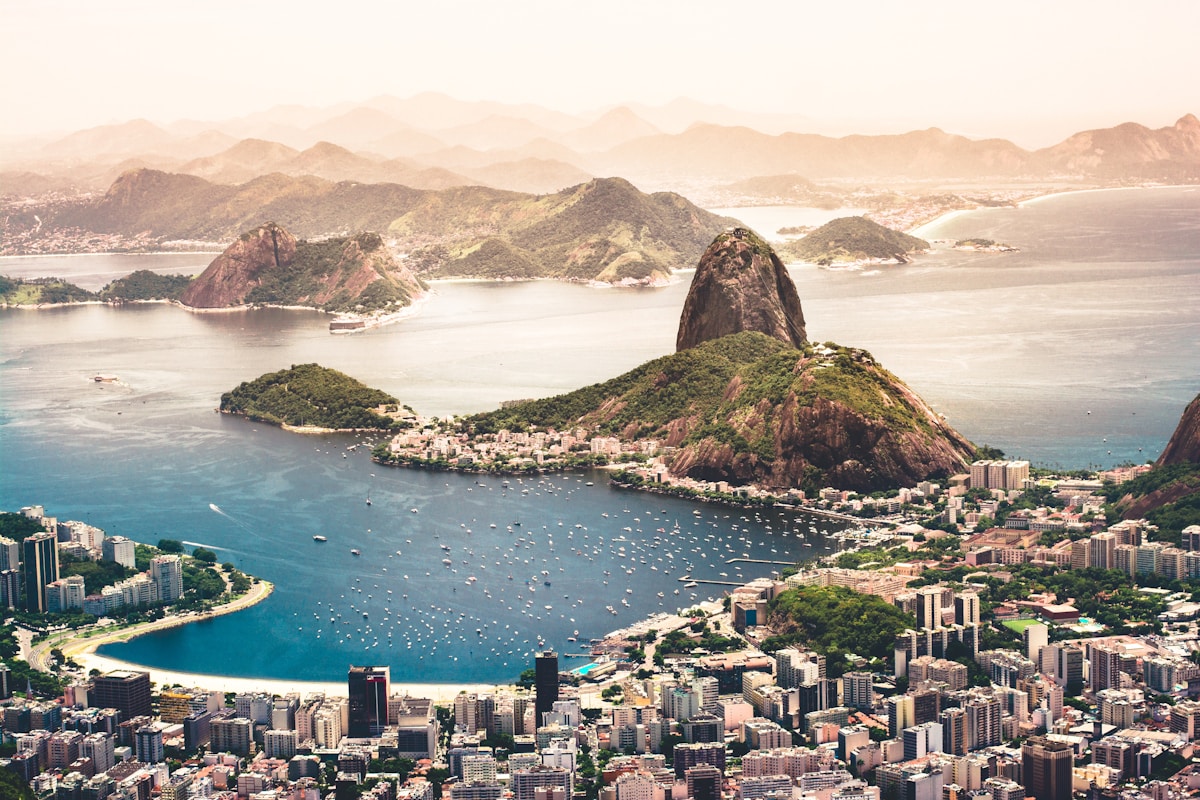
Rio de Janeiro remains the gateway to Brazil for good reason. The city's geography alone — granite peaks rising directly from the Atlantic, dense tropical forest in the middle of the urban grid, wide crescent beaches backed by mountains — is unlike any other major city in the world.
Christ the Redeemer stands atop Corcovado mountain at 710 meters, arms open over the city. The views from the summit are extraordinary — the sprawl of the city, the lagoon, the ocean, the islands of Guanabara Bay. A cog railway or van takes you to the top, though lines can be long during peak season. Early morning visits avoid the worst crowds.
Sugarloaf Mountain (Pão de Açúcar) offers a different perspective — a two-stage cable car ride to a rounded granite peak at the mouth of the bay. The sunset from Sugarloaf, with the city lights beginning to glow below, is one of the most photographed moments in Brazil.
The beaches of Copacabana and Ipanema need no introduction, but they are genuinely worth your time. Ipanema is the more refined of the two — clear water, mountain views, and a beachfront culture that revolves around exercise, socializing, and cold coconut water from vendors on the sand. Copacabana is grittier, longer, and more varied in atmosphere.
Beyond the postcard spots, Rio has depth. The hillside neighborhood of Santa Teresa is a maze of cobblestone streets, art studios, and restaurants with panoramic views. Lapa comes alive at night with samba clubs and street parties. And Tijuca National Park — the world's largest urban rainforest — offers hiking trails, waterfalls, and wildlife within 30 minutes of Ipanema.
Getting around Rio is straightforward with ride-hailing apps like Uber and 99, both of which require a working mobile data connection. Having your phone connected from the moment you land makes navigating this sprawling city dramatically easier.
Salvador da Bahia
If Rio is Brazil's face, Salvador is its soul. The capital of Bahia — and Brazil's first colonial capital — is the epicenter of Afro-Brazilian culture, with a population, cuisine, music, and spiritual life shaped profoundly by West African heritage.
Pelourinho, the UNESCO-listed historic center, is a grid of steep cobblestone streets lined with pastel-colored colonial buildings and gold-encrusted churches. On Tuesday evenings, the legendary percussion group Olodum performs free concerts in the main square — the energy is visceral and unforgettable.
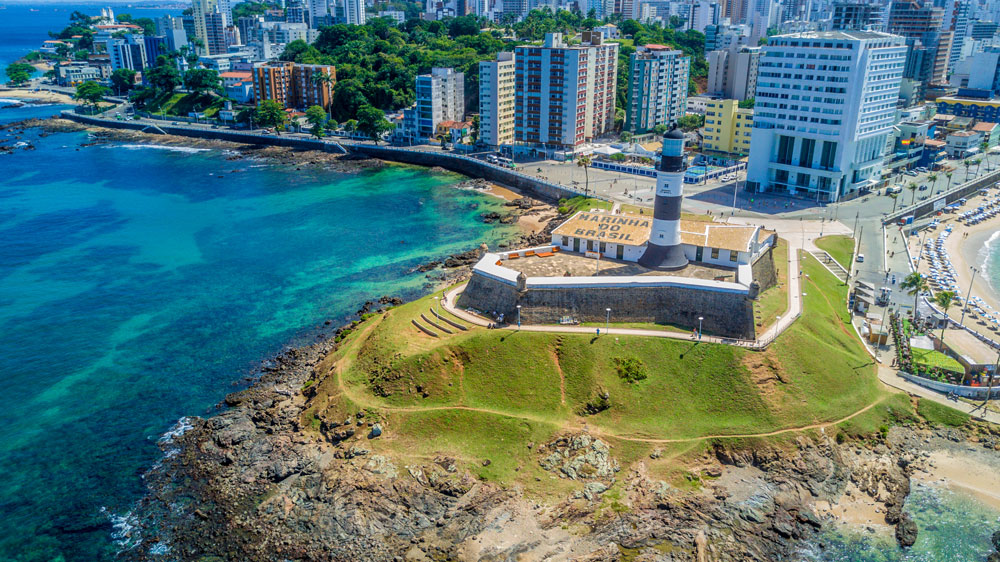
But Salvador extends far beyond its historic core. The Farol da Barra lighthouse offers the city's best sunset ritual. The beaches stretch for over 50 kilometers along the coast — from the sheltered crescent of Porto da Barra (consistently rated one of the best urban beaches in the world) to the quieter, more local Praia do Flamengo in the north.
The food in Salvador is unlike anything else in Brazil. Acarajé — deep-fried black-eyed pea balls stuffed with shrimp paste, sold by women in traditional white dresses — is the city's signature street food. Moqueca baiana, a rich seafood stew with coconut milk and palm oil, is served in clay pots across the city. The Afro-Brazilian flavors of Bahia are bold, complex, and completely unique.
Salvador is also the departure point for Morro de São Paulo, a car-free island village with numbered beaches, and Ilha dos Frades, a protected archipelago with pristine water. Both make exceptional day trips.
For a deeper dive into Salvador, see our complete guide: Best Things to Do in Salvador.
Fernando de Noronha
Fernando de Noronha is Brazil's most exclusive natural destination — a volcanic archipelago 350 kilometers off the northeast coast, with strict visitor limits, crystal-clear water, and marine life so abundant that dolphins escort your boat into the harbor.
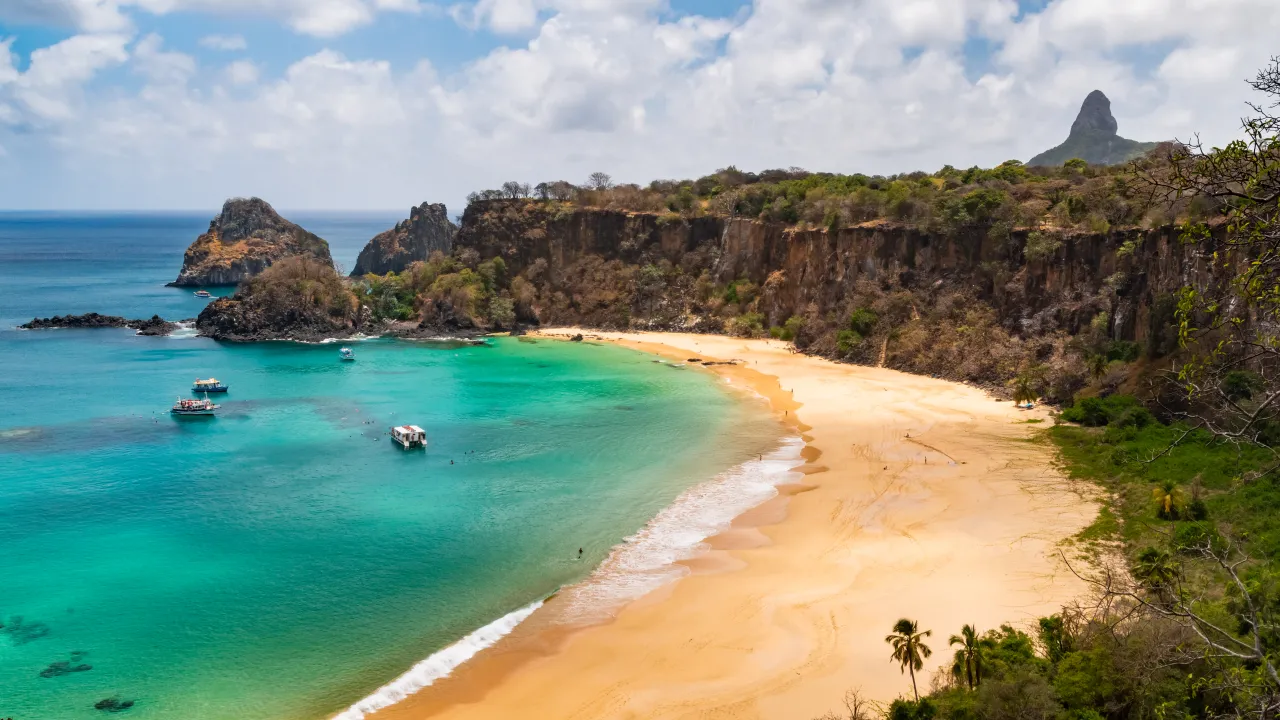
Baía do Sancho has been repeatedly voted the best beach in the world, and for once the ranking is justified. A steep staircase carved into a cliff descends to a crescent of sand backed by towering red volcanic walls, with water so clear you can see the fish from the clifftop. The snorkeling here — and at Baía dos Porcos next door — is extraordinary.
The island is a marine protected area with some of the best diving in the South Atlantic. Visibility regularly exceeds 40 meters. Spinner dolphins gather in pods of hundreds in the Baía dos Golfinhos. Sea turtles, reef sharks, and rays are routine sightings.
Getting there: Flights operate daily from Recife (1 hour) and Natal (1 hour). There are no flights from Rio or São Paulo — you must connect through one of these two cities. An environmental preservation tax (Taxa de Preservação Ambiental) is charged per day of stay and increases with longer visits. Book accommodation and flights well in advance — the island has limited capacity by design.
Fernando de Noronha is not cheap. But for travelers who prioritize pristine nature over convenience, it is one of the most remarkable places on the planet.
Lençóis Maranhenses
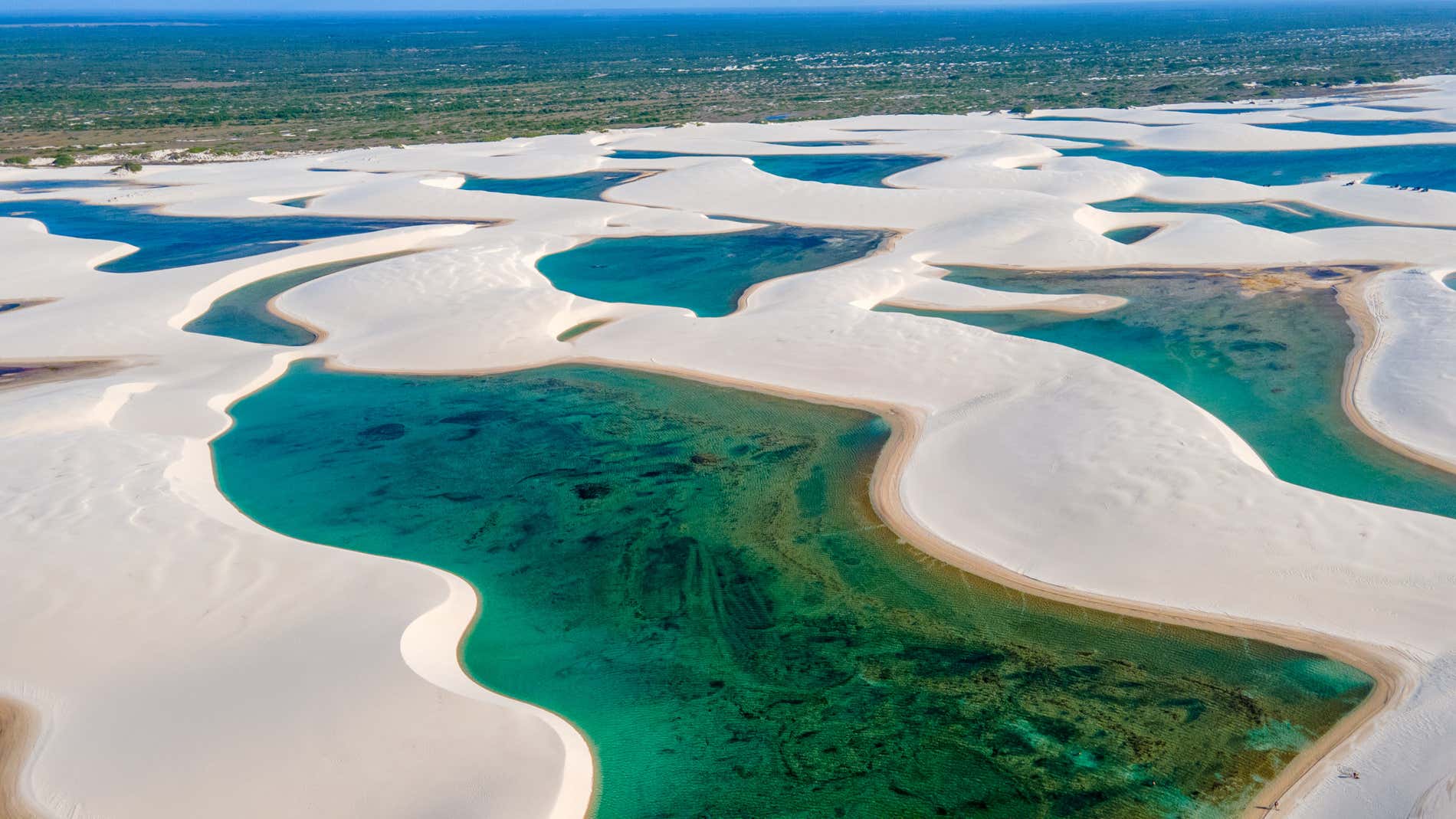
Lençóis Maranhenses is one of those landscapes that looks digitally fabricated — but it is entirely real. A vast expanse of towering white sand dunes stretching 70 kilometers along the northern coast of Maranhão state, punctuated by thousands of freshwater lagoons that appear during the rainy season and glow in shades of turquoise, emerald, and sapphire.
The dunes form part of Parque Nacional dos Lençóis Maranhenses, a 155,000-hectare national park with no roads, no buildings, and no permanent inhabitants. The landscape shifts constantly — the wind reshapes the dunes, the rains fill and drain the lagoons, and the whole scene changes week to week.
The best time to visit is June to September, when the lagoons are at their fullest after the rainy season (January to May). By October and November, the smaller lagoons begin to dry up. The two most famous lagoons — Lagoa Azul and Lagoa Bonita — are accessible by 4x4 vehicle from the small town of Barreirinhas.
Getting there: Fly to São Luís (the state capital of Maranhão), then take a 4-hour transfer by van or bus to Barreirinhas. From Barreirinhas, all excursions into the park are by 4x4 or boat. Guided tours are essential — there are no marked trails in the dunes, and disorientation is a real risk.
São Luís itself is worth a day or two. Its historic center is a UNESCO World Heritage Site, filled with azulejo-tiled colonial buildings, reggae music venues (São Luís is Brazil's unlikely reggae capital), and excellent local food.
Foz do Iguaçu
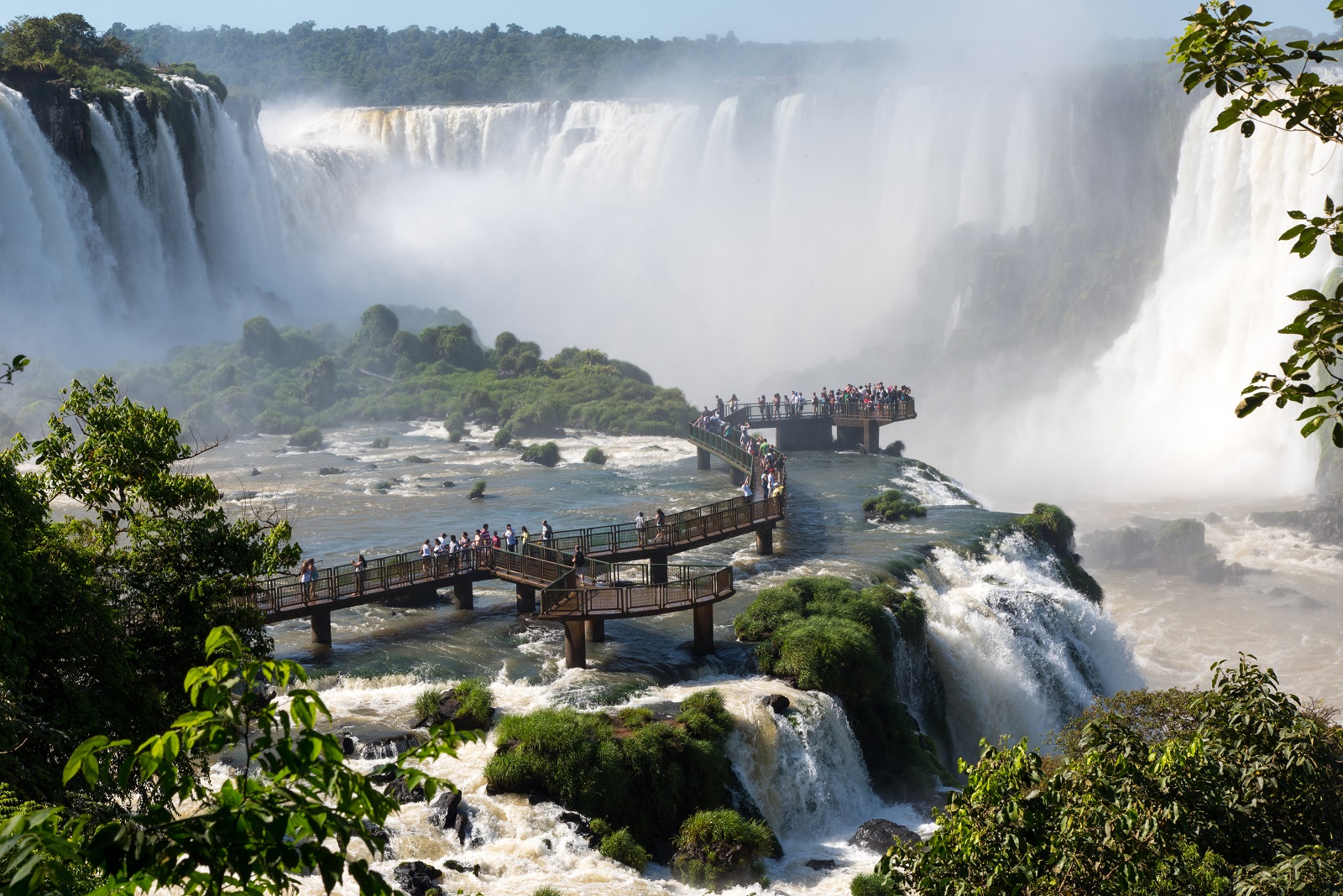
Iguaçu Falls is one of the great natural spectacles on Earth — 275 individual waterfalls spread across nearly 3 kilometers of the Iguaçu River, crashing down up to 80 meters into a gorge that straddles the border between Brazil and Argentina. The scale is genuinely difficult to comprehend until you are standing in the spray.
The Brazilian side offers the panoramic perspective. A well-maintained walkway extends along the canyon rim, delivering increasingly dramatic views until you reach the main platform at the base of the Devil's Throat (Garganta do Diabo) — the largest and most powerful section. The mist here is constant and the noise is thunderous. You will get soaked.
The Argentine side (accessible via a short border crossing) offers a more immersive experience with catwalks that extend directly over the top of the falls. Many travelers visit both sides over two days — the experiences are complementary rather than redundant.
Beyond the falls: The Parque das Aves (Bird Park) on the Brazilian side houses more than 1,300 birds of 130 species in walk-through aviaries set in Atlantic Forest. The Triple Frontier landmark — where Brazil, Argentina, and Paraguay meet at the confluence of the Iguaçu and Paraná rivers — is a short drive away. And the Itaipu Dam, one of the largest hydroelectric plants in the world, offers impressive engineering tours.
Getting there: Foz do Iguaçu has its own airport (IGU) with direct flights from São Paulo, Rio de Janeiro, and Curitiba. The falls are about 20 minutes from the city center by taxi or ride-hailing app.
Florianópolis
Florianópolis — Floripa to locals — is an island city off the coast of Santa Catarina state that has quietly become one of Brazil's most desirable destinations. With 42 beaches, a central lagoon, Atlantic Forest trails, and a thriving food and nightlife scene, it attracts surfers, digital nomads, families, and backpackers in roughly equal measure.
The island is divided informally into zones. The east coast (Praia Mole, Joaquina, Campeche) is where the surf culture lives — powerful waves, sandy dunes, and a relaxed, athletic crowd. The north (Jurerê Internacional, Canasvieiras) is more developed and resort-oriented, with calm water and upscale beach clubs. The south (Campeche, Pantano do Sul, Lagoinha do Leste) feels wilder and more remote — some of the most beautiful beaches on the island require short hikes.
Lagoa da Conceição, the large central lagoon, is the social and culinary heart of the island. Restaurants, bars, and shops line its shores, and the lagoon itself is a popular spot for kitesurfing and stand-up paddleboarding when the afternoon winds pick up.
Florianópolis is also one of Brazil's top digital nomad hubs. Reliable internet, a large coworking community, and an exceptional quality of life draw remote workers from around the world — particularly between March and November, when the summer crowds thin out and the pace becomes more local.
Best time to visit: December to February for peak beach season (busy, expensive). March to May for the sweet spot of good weather without the crowds. June to August is cooler and quieter.

Amazon Rainforest
The Amazon is the world's largest tropical rainforest — a biological engine that produces 20% of the planet's oxygen, shelters 10% of all known species, and drains an area larger than Western Europe through a river system so vast that its main channel can be 10 kilometers wide.
Manaus is the primary gateway. This city of two million people sits at the confluence of the dark Rio Negro and the muddy Rio Solimões — where they merge without mixing for several kilometers in the famous Meeting of the Waters (Encontro das Águas). Boat tours to this natural phenomenon depart daily.
Most Amazon experiences are based at jungle lodges — remote accommodations ranging from basic to luxurious, situated along tributaries of the Amazon River. Stays of 3 to 5 nights are typical. Activities include guided jungle walks, canoe trips through flooded forests, piranha fishing, caiman spotting at night, and visits to riverside communities. The diversity of plant and animal life is staggering — parrots, toucans, monkeys, sloths, river dolphins, and anacondas all inhabit this ecosystem.
Wet season vs. dry season: The dry season (June to November) offers easier trekking on exposed riverbanks and better wildlife concentration around shrinking water sources. The wet season (December to May) floods the forest canopy and allows for kayaking among the treetops — a surreal, unforgettable experience. Both seasons have compelling arguments.
Getting there: Manaus has an international airport (MAO) with direct flights from São Paulo, Rio de Janeiro, Brasília, and several other Brazilian cities. There are no roads connecting Manaus to the rest of Brazil — you fly or you take a boat.

Suggested Itineraries at a Glance
Brazil's distances are vast, so choosing a realistic itinerary is essential. Here is a quick overview of what is achievable in different timeframes:
| Duration | Route | Highlights |
|---|---|---|
| 7 days | Rio de Janeiro + Paraty or Ilha Grande | City landmarks, beaches, colonial coast |
| 10 days | Rio de Janeiro + Salvador | Two cities, two cultures, beaches and food |
| 14 days | Rio + Salvador + Foz do Iguaçu or Amazon | Multi-region, waterfalls or jungle, full Brazil experience |
For detailed day-by-day route plans with transport logistics and budget breakdowns, see our complete itinerary guide: Brazil Travel Itinerary Ideas (7, 10 & 14 Days).
When to Visit Each Destination
| Destination | Best Months | Why |
|---|---|---|
| Rio de Janeiro | April–May, Sep–Nov | Pleasant weather, fewer crowds, lower prices |
| Salvador | Sep–Dec | Dry season, excellent weather, affordable |
| Fernando de Noronha | Aug–Nov | Calm seas, best diving visibility, less rain |
| Lençóis Maranhenses | Jun–Sep | Lagoons at fullest, dry weather for touring |
| Foz do Iguaçu | Mar–May, Aug–Oct | Strong water flow, comfortable temperatures |
| Florianópolis | Dec–Feb (beach), Mar–May (value) | Summer for beaches, autumn for peace |
| Amazon | Jun–Nov (dry), Feb–Apr (wet) | Dry for trekking, wet for flooded forest |
For a complete seasonal breakdown by region, see: Best Time to Visit Brazil in 2026.
Practical Travel Tips
Getting Between Destinations
Brazil is enormous. Domestic flights are the only practical way to move between regions. Airlines like Azul, LATAM, and Gol operate frequent routes connecting all major cities. Book in advance on Google Flights or directly with the airlines — prices increase sharply closer to travel dates.
For shorter distances (Rio to Paraty, Salvador to Morro de São Paulo), buses, vans, and boats are viable and often scenic. Within cities, Uber and 99 (ride-hailing apps) are affordable and widely available — but they require mobile data to function.
Staying Connected
Wherever you travel in Brazil, reliable mobile data transforms the experience. You need it for calling rides, navigating unfamiliar cities, translating Portuguese, checking schedules, and communicating with hosts and guides via WhatsApp — the default communication tool in Brazil.
International roaming typically costs $10–15 USD per day with major carriers. Buying a local SIM card requires a CPF (Brazilian tax ID), which most tourists do not have. Airport WiFi is inconsistent and often requires a Brazilian phone number to log in. Public WiFi in hotels and cafes can be slow and carries real security risks for banking and personal data.
The cleanest solution is a travel eSIM. With FlyConnecta, you activate your Brazil eSIM before your flight and arrive already connected to Brazilian networks (Vivo, Claro, TIM). No store visits, no CPF, no waiting. Choose a 7, 15, or 30-day plan depending on your trip length.
Currency and Payments
The Brazilian Real (BRL) is the local currency. Credit and debit cards (Visa, Mastercard) are widely accepted in cities. Smaller vendors, beach barracas, and rural areas are often cash-only. ATMs are widely available — use those inside banks or shopping malls for safety.
Safety Basics
Brazil is safe for travelers who exercise standard urban awareness. Avoid displaying expensive electronics in crowded areas, use ride-hailing apps at night rather than walking long distances, and keep digital copies of your documents on your phone. For a detailed safety overview, see: Is Brazil Safe for Tourists?.
Frequently Asked Questions
What are the top 5 must-visit places in Brazil?
For first-time visitors, the top five are: Rio de Janeiro (iconic landmarks and beaches), Salvador (Afro-Brazilian culture and food), Foz do Iguaçu (one of the world's greatest waterfalls), Fernando de Noronha (pristine island paradise), and the Amazon Rainforest (unrivaled biodiversity). Each offers an experience you genuinely cannot replicate elsewhere.
How many days do I need to see Brazil?
A minimum of 7 days allows you to explore one region well — typically Rio de Janeiro and the surrounding coast. Ten days lets you add a second city like Salvador. For a multi-region trip that includes waterfalls, jungle, or islands, plan for 14 days or more. Brazil rewards longer stays.
Is Brazil expensive to visit?
Brazil offers a wide range of budgets. Budget travelers can manage on $50–70 USD per day (hostels, street food, public transport). Mid-range travelers spending $100–150 USD per day will be comfortable with good hotels, restaurants, and activities. Fernando de Noronha and Amazon lodges are on the higher end. The Northeast is generally the most affordable region.
Is it safe to travel around Brazil?
Yes, with standard precautions. Stick to well-trafficked areas, use ride-hailing apps rather than walking alone at night, avoid displaying valuables, and keep your phone discreet in crowded spaces. Tourist areas in Rio, Salvador, Florianópolis, and Foz do Iguaçu are well-patrolled. Millions of international visitors travel Brazil safely every year.
Do I need a visa to visit Brazil?
Visa requirements depend on your nationality. Citizens of the EU, UK, Australia, and several other countries can enter Brazil visa-free for up to 90 days. US and Canadian citizens need an e-visa, which can be applied for online. Check Brazil's official consulate website for the latest requirements for your passport.
What is the best time of year to visit Brazil?
It depends entirely on where you are going. The Northeast is best from September to December. Rio is ideal in April to May or September to November. The Amazon dry season runs June to November. Florianópolis peaks December to February. For a complete breakdown, see our seasonal guide.
Can I use my phone in Brazil without roaming charges?
International roaming in Brazil typically costs $10–15 per day. A much better option is a travel eSIM like FlyConnecta — it connects you to local Brazilian networks at data rates far below roaming, activates instantly, and requires no CPF or store visit. Plans are available for 7, 15, and 30 days.
What is the best way to get around Brazil?
Domestic flights connect all major destinations — airlines like Azul, LATAM, and Gol offer frequent services. Within cities, ride-hailing apps (Uber, 99) are the most convenient option. For shorter coastal routes, buses and boats are available. There is no practical train network for intercity travel.
Start Planning Your Brazilian Adventure
Brazil is a country that delivers on its promise. The landscapes are as dramatic as the photos suggest. The culture is as warm and complex as its reputation implies. And the experiences — watching the sunrise over the Amazon, standing in the spray of Iguaçu Falls, eating acarajé on a Salvador street corner at sunset — are things that stay with you long after you leave.
The key to a great Brazil trip is realistic planning: choose your region, match your timing to the season, book domestic flights early, and arrive connected. With FlyConnecta, you get a Brazil eSIM that activates before you fly — instant connectivity on arrival, no CPF, no paperwork, no stress. Choose a 7, 15, or 30-day plan and land ready to explore.
Suggested internal links: