Brazil is a country of continental proportions — and that means different regions experience completely different weather at the same time. While it is summer in Rio de Janeiro, the Amazon is in the middle of its wet season. While Carnival erupts in Salvador, the beaches of Florianópolis are at their most crowded. Timing your trip well is not just about weather. It is about matching the Brazil you want to experience with the moment it is at its best.
This guide breaks down the best time to visit Brazil by region, type of traveler, and budget — so you can plan a trip that puts you in the right place at the right time.
Understanding Brazil's Climate
Brazil is the fifth largest country in the world, spanning over 8.5 million square kilometers. It has five distinct climate zones: the equatorial Amazon in the north, the semi-arid northeast, the tropical savanna of the central plateau, the subtropical southeast coast, and the temperate south. What counts as "good weather" in one part of Brazil can be completely different from another.
Brazil does not follow the classic four-season model. Instead, most of the country experiences two broad seasons: the wet season (typically October to March, also called "summer") and the dry season (April to September, often referred to as "winter"). The timing, intensity, and character of each season shifts significantly depending on where you are.
Weather by Region
The North — Amazon Region
The Amazon operates on its own schedule. This vast rainforest region, centered around cities like Manaus and Belém, receives rain almost year-round. The dry season (June to November) is generally considered the best time to visit. During this period, water levels drop to reveal riverbanks and beaches along the Amazon tributaries — ideal for wildlife watching, jungle treks, and river boat journeys.
The wet season (December to May) floods the forest, creating the "flooded forest" (várzea) experience where you can kayak among the treetops. This is a unique and genuinely extraordinary way to see the Amazon if you embrace it.
Best time to visit the Amazon: June to November for classic jungle experiences. February to April for flooded forest adventures.
The Northeast — Salvador, Fortaleza, Recife
The Northeast is Brazil's sunshine coast — the region with the most reliable good weather and the longest beach season. Cities like Salvador, Fortaleza, Recife, and Natal enjoy warm temperatures and relatively low rainfall for most of the year.
The dry season (June to January) is prime time in the Northeast. The September to December window is often the sweet spot: schools are back in session (fewer crowds), prices are more reasonable, and the weather is excellent. Salvador in October or November is one of the best travel combinations in Brazil.
The wet season (February to May) brings more rain but it rarely lasts all day. The Northeast tends to get intense afternoon showers rather than prolonged gray days.
Best time to visit the Northeast: September to December. Salvador, Fortaleza, and Natal are at their best.
The Southeast — Rio de Janeiro and São Paulo
The Southeast is home to Brazil's two most visited cities, and both follow a similar seasonal rhythm.
Summer (December to March) is hot, humid, and wet — but also the most vibrant period. Carnival happens in February or March, beach season is in full swing, and the cities are electric. Temperatures in Rio reach 38–40°C (100–104°F) on the hottest days.
Autumn and Spring (April–May and September–November) offer pleasant temperatures (25–30°C), lower hotel prices, and smaller crowds. Many experienced travelers consider this the best time to visit Rio de Janeiro and São Paulo — the weather is comfortable, the cities are beautiful, and you avoid the summer peak.
Winter (June to August) means mild temperatures (18–25°C), almost no rain, and the lowest prices of the year. Excellent for exploring Rio and São Paulo without the heat. The ocean is cooler but still swimmable.
Best time to visit Rio de Janeiro and São Paulo: April–May or September–October for the best balance of weather, price, and crowd levels.
The South — Florianópolis
Brazil's south behaves more like a temperate climate. Florianópolis — one of Brazil's most popular beach destinations and a hub for digital nomads — is at its best in summer (December to February), when the beaches are warm, the island is alive, and the Atlantic waters are perfect for swimming and surfing.
But summer in the South is also the most crowded and expensive period. Florianópolis fills with Brazilian holidaymakers, prices at least double, and finding accommodation requires advance booking.
Autumn (March to May) sees a dramatic drop in crowds while the weather remains warm enough for beach days. This is the secret sweet spot for Florianópolis — relaxed vibe, lower prices, and genuinely beautiful scenery.
Winter (June to August) is cold and often rainy — not ideal for beach trips but fine for passing through or exploring the island's interior.
Best time to visit Florianópolis: December to February for beach season. March to May for value and tranquility.
High Season vs. Low Season
Understanding Brazil's peak and off-peak periods will directly affect your budget and overall experience.
High Season
- December to February (Brazilian summer): Peak prices across most of the country, especially in the South and Southeast. The Carnival period (February/March) commands the highest prices of the year in Rio and Salvador.
- June to July (Brazilian school holidays): A secondary peak in the Northeast and South, when Brazilian families travel domestically.
Low Season
- April to May and August to October: The quietest periods in most of Brazil. Hotels are cheaper, flights are more affordable, and popular attractions are far less crowded. For international travelers who can be flexible with dates, this is where the best value lies.
Best Time for Beaches
Brazil's beach season varies by region. Here is a quick reference:
| Region | City / Beach | Best Beach Season |
|---|---|---|
| Southeast | Rio de Janeiro | November–March |
| South | Florianópolis | December–February |
| Northeast | Salvador, Fortaleza | September–January |
| Northeast | Maceió, Natal | August–February |
| North | Amazon river beaches | June–November |
For the longest and most reliable beach season: the Northeast delivers year after year. Salvador is the heart of it — warm water, strong sun, and vibrant beach culture for most of the year.
Best Time for Carnival
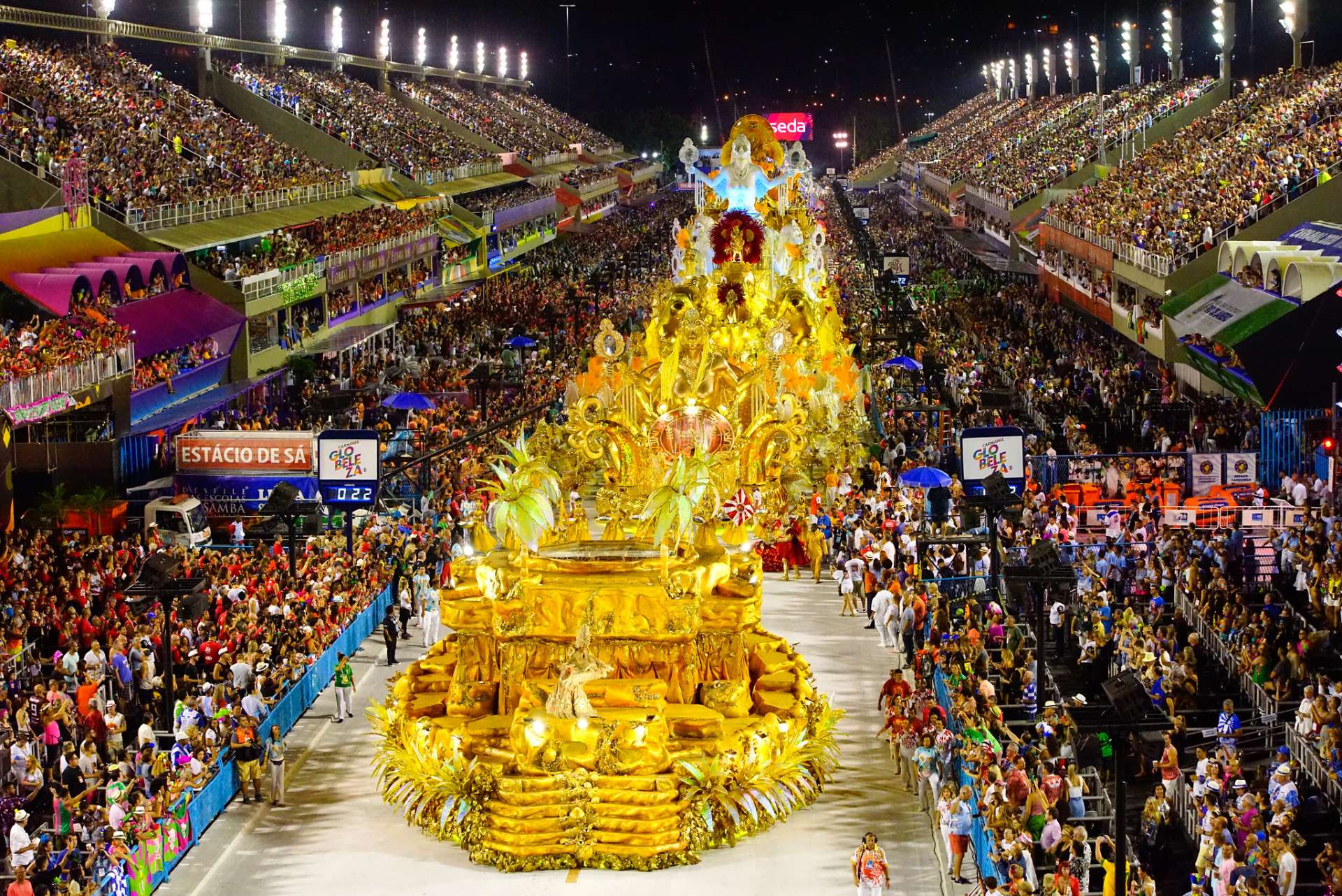
Carnival is one of the most powerful reasons people visit Brazil, and the timing is fixed by the Catholic calendar: it always falls 47 days before Easter, landing in February or March depending on the year.
In 2026, Carnival runs from February 14–17, with pre-Carnival blocos in Rio de Janeiro beginning in late January.
- Rio de Janeiro Carnival is world-famous for the Sambódromo parades and the hundreds of free street blocos across the city.
- Salvador Carnival is the largest street party on the planet — raw, musical, Afro-Brazilian, and overwhelmingly joyful.
If you plan to attend Carnival, book your flights and accommodation at least 6–12 months in advance. Hotels and Airbnbs in Rio and Salvador sell out completely, and prices triple or more compared to normal periods.
Best Time for Digital Nomads
For digital nomads planning an extended stay in Brazil, timing goes beyond weather:
- April to October is the sweet spot for most Brazilian cities. Accommodation is cheaper, neighborhoods feel more local, and the daily pace is more relaxed.
- São Paulo has no real "beach season" — any month works — but April to October keeps costs down and avoids summer humidity.
- Rio de Janeiro in April to June or August to October offers pleasant weather, more affordable rents, and a city that feels like it belongs to its residents.
- Florianópolis from March to June has a calmer, more authentic atmosphere. The tech and nomad community stays year-round while tourist crowds thin out.
- Salvador from September to November is culturally rich, weather-friendly, and very affordable.
Working remotely from Brazil means needing reliable internet everywhere you go. International roaming is expensive, airport WiFi is inconsistent, and public WiFi can be unsecured. An eSIM like FlyConnecta activates instantly before you leave home, connects you to Brazilian networks (Vivo, Claro, TIM) from the moment you land, and requires no CPF or store visit. Choose a 7, 15, or 30-day plan depending on your stay.
Cheapest Months to Visit Brazil
If budget is your primary concern, these are the consistently cheapest periods:
- May — After Carnival and summer, before June school holidays. Flights and hotels are at their lowest. Great weather in the Northeast, decent in the Southeast.
- August — Middle of the "winter" season. The Northeast is excellent. Best international flight deals of the year.
- September — Great weather in the Northeast, comfortable in the Southeast, prices still moderate. One of the best value months in Brazil overall.
- October — Excellent for Salvador and the Northeast. Rio and São Paulo start warming up, prices still below peak.
Brazil Events Calendar 2026
| Date | Event | Location |
|---|---|---|
| January | Réveillon parties and blocos | Rio de Janeiro, Salvador |
| Feb 14–17 | Carnival 2026 | Rio de Janeiro, Salvador |
| March–April | Easter Week (Semana Santa) | Nationwide |
| June | Festas Juninas (June Festivals) | Northeast Brazil |
| June–July | Brazilian school holidays | Nationwide (higher prices) |
| October | Oktoberfest Blumenau | Blumenau, Santa Catarina |
| December 31 | Réveillon New Year's Eve | Copacabana, Rio de Janeiro |
Festas Juninas are particularly special in the Northeast — a celebration of rural culture with forró music, quadrilha dancing, and traditional food. Caruaru (Pernambuco) and Campina Grande (Paraíba) host the largest June Festivals in the region.
Practical Planning Advice
Book Early for Carnival and Summer
The earlier you book, the more you save. For Carnival 2026, aim to have flights and accommodation locked in by September 2025. For Christmas and New Year's in Rio, October or November is already cutting it close.
Use Shoulder Season to Your Advantage
April–May and August–October offer nearly all the experiences of peak season at a fraction of the price. If you have flexibility, this is when Brazil rewards travelers the most.
Plan Around Your Region of Interest
Do not think of Brazil as one destination. Plan by region. If you want Carnival, go to Rio or Salvador in February. If you want beaches without crowds, go to the Northeast in October. If you want digital nomad infrastructure, São Paulo is always on and Florianópolis is best from March to November.
Stay Connected from Day One
Wherever you go in Brazil and whenever you arrive, reliable mobile connectivity makes every practical aspect of travel easier — from calling a ride on Uber to checking Google Maps to messaging your host via WhatsApp.
Buying a local SIM card in Brazil requires a CPF (Brazilian tax ID), which most tourists do not have. Airport WiFi is inconsistent and often requires a Brazilian phone number to log in. The cleanest solution is a travel eSIM. With FlyConnecta, you activate your Brazil eSIM before your flight and arrive already connected — no store visits, no CPF, no wasted time at the airport.
Frequently Asked Questions
What is the best month to visit Brazil overall?
There is no single "best month" for all of Brazil. For Rio de Janeiro, September to November offers the best balance of weather and price. For Salvador and the Northeast, October to December is excellent. For Florianópolis, December to February is peak beach season. Match your month to the region you are visiting.
Is December a good time to visit Brazil?
December is peak summer in Brazil's Southeast and South — hot, humid, and busy. Rio de Janeiro is lively and the beaches are full. It is also when prices start rising for Christmas and New Year's. If you want beach weather and festive atmosphere, December works well. Book early and expect to pay more.
When is Carnival in Brazil in 2026?
Carnival 2026 falls on February 14–17. Pre-Carnival blocos in Rio de Janeiro begin in late January. Book accommodation and flights 6–12 months in advance.
Is Brazil good to visit in July?
July is a solid time to visit, especially the Northeast. Salvador, Fortaleza, and Natal have dry, sunny weather. In the South and Southeast, July is cooler and mild — good for sightseeing in São Paulo and Rio. It is also Brazilian school holiday season, so domestic tourism picks up.
When is the cheapest time to fly to Brazil?
May, August, and September generally offer the lowest international airfares to Brazil. Avoid December through February and the Carnival period, when prices spike significantly.
Does it rain a lot in Rio de Janeiro?
Rio's summer (December to March) brings heavy afternoon thunderstorms — intense but usually short-lived. The rest of the year is notably drier. April to September sees mostly sunny, clear days.
Is Brazil hot year-round?
Most of Brazil is warm to hot year-round. The Northeast is warm in every month. The South is cooler in June to August, with temperatures occasionally dropping below 10°C. The Amazon is always hot and humid.
Can I use my phone in Brazil without expensive roaming charges?
International roaming in Brazil typically costs $10–15 per day with major carriers. A better alternative is a travel eSIM like FlyConnecta — it connects you to Brazilian networks (Vivo, Claro, TIM) at local data rates, activates instantly, requires no CPF, and comes in 7, 15, and 30-day plans.
Plan Your Brazil Trip With Confidence
Brazil is never wrong. Every region, every season, every city offers something genuinely extraordinary — the question is simply which version of Brazil you want to experience, and when.
Use this guide to match your travel dates to your goals: Carnival in Rio, beaches in Salvador, the jungle in the Amazon, or a working escape in Florianópolis. Whichever you choose, make sure you arrive connected.
With FlyConnecta, you get a Brazil eSIM that activates before you fly — instant connectivity on arrival, no CPF, no paperwork, no stress. Choose a 7, 15, or 30-day plan and land in Brazil ready to explore.