Top Adventure Activities in Brazil for Tourists
Brazil is not a country you experience passively. It is a place that pulls you in — into the water, up the hillside, across the dune. For adventure travelers, it offers one of the most diverse menus on the planet: ancient tablelands with waterfalls and cave systems, world-class surf breaks, sand dunes that stretch to the horizon, canopy ziplines above Atlantic rainforest, and rivers that cut through landscapes few tourists ever see.
This guide covers the best adventure activities in Brazil for international visitors — what to expect, the best seasons to go, safety advice, and practical tips for making each experience count.
Hiking in Chapada Diamantina, Bahia
Why Chapada Diamantina?
Located in the interior of Bahia, about 450 km from Salvador, Chapada Diamantina is Brazil's most spectacular inland adventure destination — a 152,000-hectare national park of sandstone plateaus, diamond-age river valleys, ancient caves, and some of the most dramatic waterfalls in South America.
The landscape looks like it was designed for hikers. Trails connect waterfalls, natural swimming holes, cave systems, and viewpoints across a region that was once the heart of Brazil's diamond mining boom. Today the only things being extracted are memories.
Best Hikes and Trails
Cachoeira do Buracão — One of the most photogenic waterfalls in Brazil. A canyon hike leads to a point where you can swim directly beneath a 100-meter cascade. The trail is challenging but manageable for moderately fit hikers.
Poço Encantado and Poço Azul — Underground freshwater lakes illuminated by natural light at certain hours. The turquoise water glows. Access is restricted to specific times of day (and months of the year for Poço Encantado) to protect the light effect.
Morro do Pai Inácio — The iconic flat-topped plateau that appears in most photographs of Chapada Diamantina. A one-hour hike to the summit rewards you with a 360-degree view across the park.
Vale do Pati — A multi-day backpacking trail considered one of the best in South America. The route passes through remote valleys, over plateaus, and connects with local farming communities. Three to five days, depending on your pace.

Safety Tips for Chapada Diamantina
- Always hike with a certified local guide for multi-day routes and for entering cave systems. Independent trails to viewpoints and shorter waterfalls are generally safe without one.
- Start early. Afternoon thunderstorms are common, especially from November to March. Being on exposed plateaus during a storm is dangerous.
- Carry more water than you think you need. Heat in the cerrado (savanna) environment is intense.
- Download offline maps. Signal is minimal in most of the park.
Best Season
April to September — dry season with cooler temperatures. October to March is possible but rain can close trails and reduce waterfall access. The light at Poço Encantado is best between April and September.
Base Town: Lençóis
The charming colonial town of Lençóis is the main gateway to the park. It has a good selection of guesthouses, local guide operators, equipment rental, and restaurants. Most hiking agencies can be contacted via WhatsApp — having a working data connection when you arrive simplifies logistics enormously.
Surfing in Itacaré, Bahia
Why Itacaré?
Itacaré, on the southern Bahia coast, is one of Brazil's most celebrated surf destinations — and one of the most visually stunning. The combination of consistent Atlantic swells, waves that break over natural reef and sand, Atlantic Forest that descends directly to the water, and a genuinely welcoming small-town atmosphere makes it a destination that earns repeat visits.
The waves here are real. This is not a beginner beach with gentle waist-high rolls. Itacaré has waves that challenge intermediate and advanced surfers, and several breaks that have hosted professional competitions.
Best Surf Breaks
Praia da Tiririca — The main beach, closest to town, with consistent waves and a lively surf scene. Intermediate to advanced.
Praia de Havaizinho — Named after Hawaii for a reason. Powerful, hollow waves over rock. Advanced surfers only. The beach access trail through forest is part of the experience.
Praia de Engenhoca — More remote, requiring a longer hike, but rewarding with less-crowded, excellent quality waves. Intermediate to advanced.
Prainha — A beautiful cove with a mix of wave types. Can be suitable for intermediate surfers in smaller conditions.

Surf Schools and Rentals
Several surf schools operate in Itacaré for beginners and travelers wanting to improve. Lessons typically run for two hours in the morning. Equipment rental — boards and rash guards — is available on Rua Pedro Longo (the main street). Beginners are taught on softer waves at Praia da Resende.
Safety Tips for Surfing in Itacaré
- Know your level. Itacaré's waves are not beginner-friendly at most breaks. Honest self-assessment prevents dangerous situations.
- Ask about currents before paddling out. Local surfers and the surf school staff are your best source of information.
- Apply reef-safe sunscreen. The reefs are alive and matter.
- Use a leash. Always.
Best Season
May to September — the Southern Hemisphere winter brings the largest and most consistent swells to Itacaré. October to April offers smaller, more manageable conditions — still surfable and better for beginners.
Sandboarding in Natal, Rio Grande do Norte
Why Natal?
Natal sits at the northeastern tip of Brazil, where the coastline catches wind and sand in ways that have produced one of the most dramatic dune systems in South America. The Lençóis Maranhenses is more famous, but Natal's dunes — particularly around the Genipabu region — are more accessible, more varied in activity options, and surrounded by a solid tourism infrastructure.
Sandboarding here is not a half-hearted tourist activity. The dunes reach heights of 50 meters or more, and the descents on boards or sledges — either sitting or standing — generate real speed and real thrills.
Sandboarding at Genipabu
Genipabu (officially Parque Estadual Dunas de Genipabu) is about 25 km north of Natal's city center. The dune landscape here is extraordinary — an endlessly shifting terrain of fine white sand that changes shape with the wind. Between the dunes, natural freshwater lagoons appear and disappear seasonally.
The most popular activity is arriving by dune buggy (a specially designed open vehicle driven by local guides known as bugueiros) and sandboarding down the steepest dunes. Bugueiros have two modes on offer: "com emoção" (with emotion — the thrilling version) and "sem emoção" (without emotion — for those who prefer their adrenaline optional). The emotional version includes sudden drops, tight turns, and the occasional near-vertical descent.

What to Bring
- Sunglasses (sand gets everywhere)
- Closed shoes or sports sandals (hot sand on bare feet at peak sun is painful)
- A change of clothes (you will be covered in sand)
- Reef-safe sunscreen
- A waterproof phone case — you will want photos
Safety Tips for Sandboarding in Natal
- Wear your sandboard correctly. Start on smaller dunes to get the feel before attempting the steepest descents.
- Listen to your buggy guide. They know every dune and drive them daily.
- Protect your eyes. Fine sand at speed is unpleasant and can be painful without eyewear.
- Stay hydrated. Heat and sun at Natal's latitudes are relentless.
Beyond the Dunes: Pipa
About 80 km south of Natal, the coastal village of Pipa combines beautiful beaches with a bohemian atmosphere, dolphin-watching lagoons, and its own set of adventure options including kite lessons, stand-up paddleboarding, and horse riding on the beach. It makes an excellent two-night base to combine with the Genipabu dune experience.
Best Season
July to January — Natal's best weather. June to September has the strongest winds (ideal for sandboarding speed). Avoid January to June, which is the rainy season and can reduce dune activities.
Ziplining and Eco-Tourism in Rio de Janeiro
Why Rio for Adventure?
Most visitors to Rio come for the beaches and the views. But Rio de Janeiro is surrounded by dense Atlantic Rainforest — one of the most biodiverse ecosystems on Earth — and within that forest are adventure activities that most tourists never discover.
The Tijuca National Park, the world's largest urban forest, sits directly in the middle of the city. Trails, waterfall hikes, canopy activities, and guided eco-tours operate within a 30-minute drive of Ipanema beach.
Zipline at Pedra Bonita
One of Rio's best-kept adventure secrets is the Pedra Bonita zipline in the São Conrado district. Launching from a 220-meter granite rock face above the Atlantic Forest, the zipline offers aerial views over the forest canopy, the lagoon, and the ocean. The ride lasts several seconds of pure flight before a controlled landing in the clearing below.
Pedra Bonita is also the most popular paragliding launch point in Rio — a short hike from the road leads to the takeoff ramp, where tandem paragliding flights with certified pilots offer 20–30 minutes of flight over the forest and beach below.
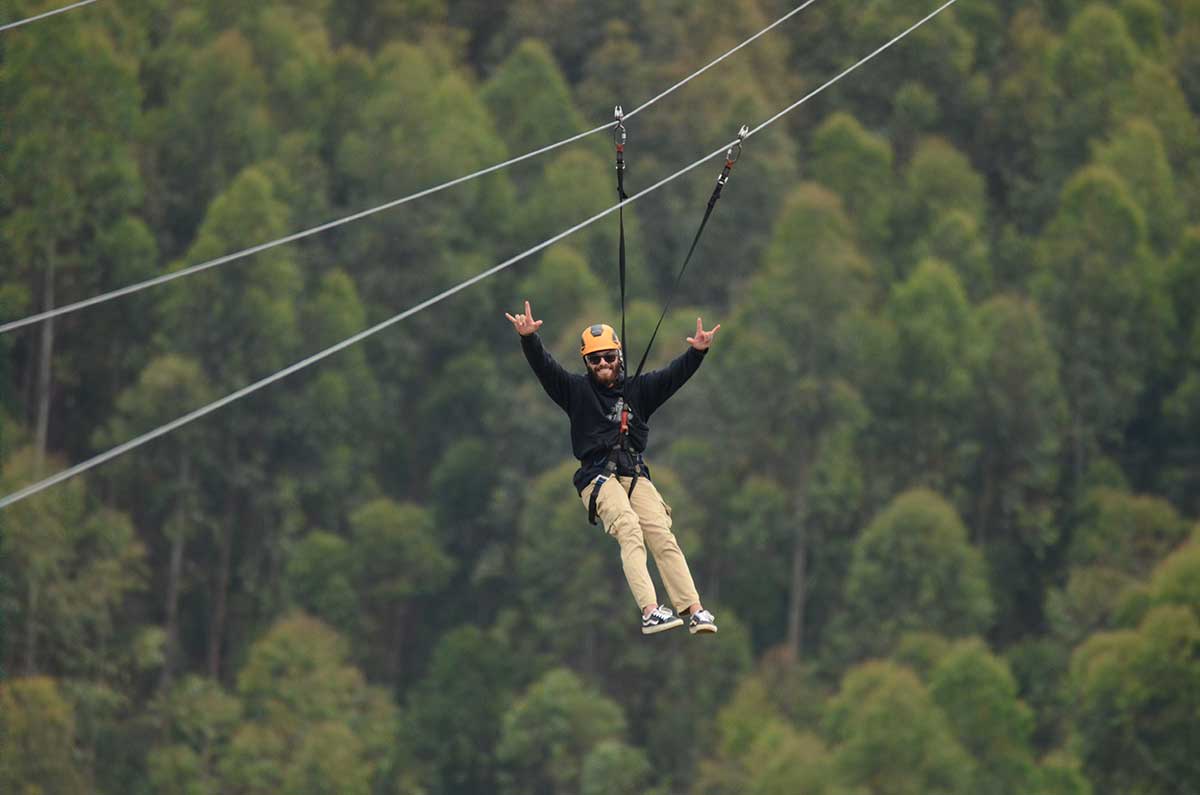
Hiking in Tijuca National Park
The Tijuca Forest, restored in the 19th century after coffee plantation clearance, is now a thriving ecosystem hiding waterfalls, ruined colonial aqueducts, and viewpoints above the city. Key trails include:
- Pico da Tijuca — Rio's highest peak at 1,021 meters. A challenging 3-hour round-trip hike with 360-degree views of the city, bay, and ocean.
- Cachoeira das Almas — An easy waterfall trail accessible to most fitness levels. Natural pools for swimming.
- Vista Chinesa — A popular viewpoint in the forest with sweeping views over Guanabara Bay.
Trail safety: Always hike with a registered guide in Tijuca National Park. Solo hiking on less-traveled trails has inherent risks. A certified guide also ensures you see far more wildlife and understand the ecosystem.
Rock Climbing in Rio
Rio's granite rock faces — including those around Sugarloaf Mountain and in the Paineiras area of Tijuca Forest — offer world-class sport climbing. Multi-pitch routes with ocean views exist for both beginners (with guided instruction) and experienced climbers. Local climbing schools offer half-day guided sessions for tourists.
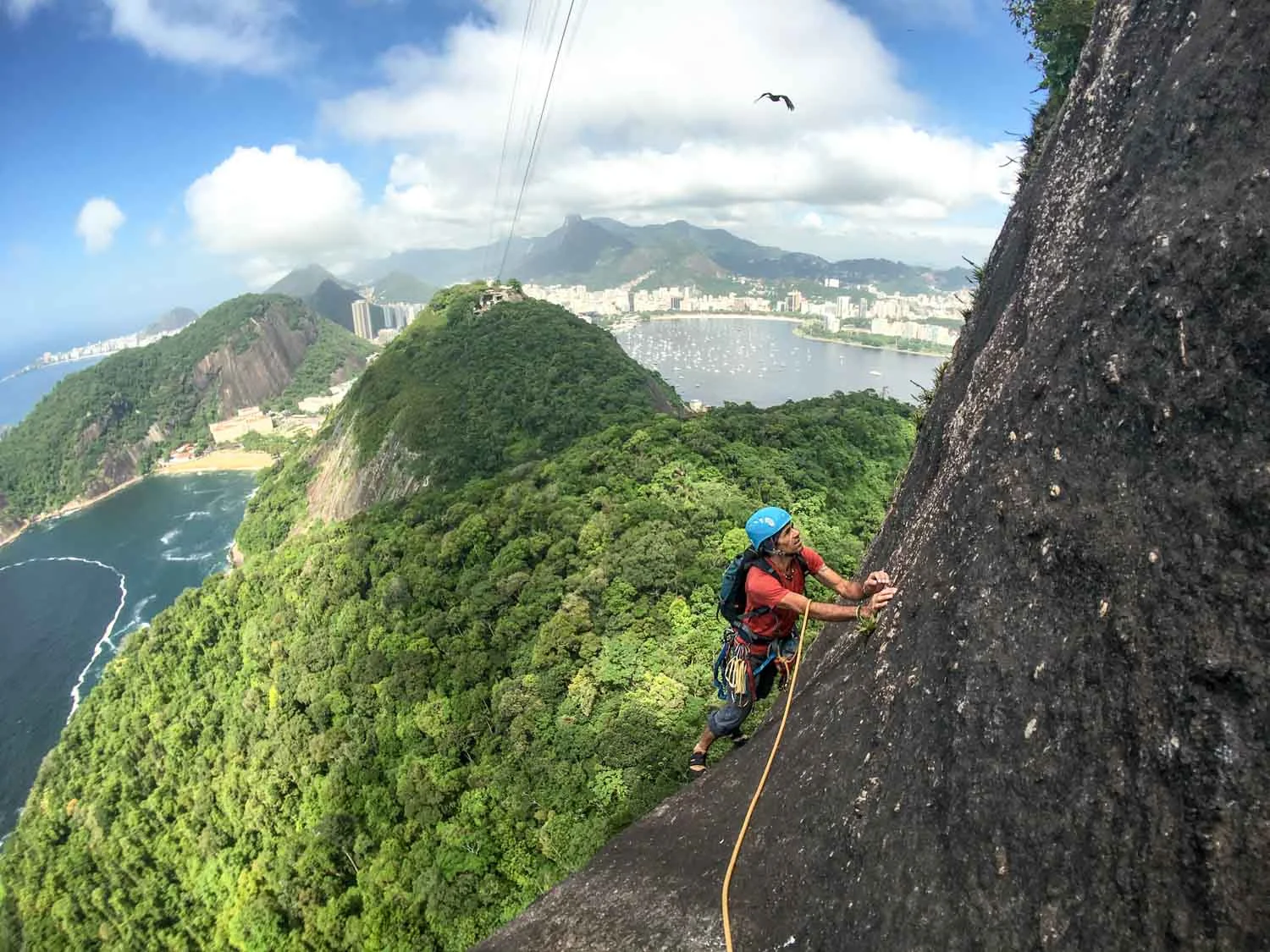
Multi-Sport Adventure in Florianópolis
Why Florianópolis?
Florianópolis (Floripa to Brazilians) is an island city in southern Brazil that quietly combines excellent surfing, kite and windsurf conditions, ocean kayaking, stand-up paddleboarding, trail running, and paragliding within a compact geography. Add dramatic lagoons, dunes, and Atlantic Forest trails, and it is one of the most complete adventure destinations in South America.
Surfing
The island's north and east coasts — particularly Praia Mole, Joaquina, and Campeche — produce quality surf throughout the year. Joaquina beach hosts annual Brazilian and South American surf championships. Mole is where Rio's surf culture meets Santa Catarina's natural energy — relaxed, social, and reliably good.
Kite and Windsurf at Lagoa da Conceição
The large central lagoon of Lagoa da Conceição is one of Brazil's best spots for kitesurfing and windsurfing. Consistent afternoon winds, warm water, and flat conditions on one side of the lagoon (with a kiteable swell on the other) attract riders from across South America. Multiple schools offer lessons for beginners.

Sandboarding at Joaquina Dunes
The large sand dunes behind Joaquina beach offer a Florianópolis version of sandboarding — smaller scale than Natal's Genipabu but accessible, free, and directly connected to one of the best surf beaches on the island. Boards are available for rent near the dune access.
Paragliding at Rio das Pacas
The Rio das Pacas launch site on the south side of the island offers tandem paragliding flights with panoramic views over the Atlantic coast and surrounding lagoons. Flights are weather-dependent — a good data connection helps you check forecasts and book at the right time.
Kayaking and SUP
Ocean kayaking and stand-up paddleboarding tours operate from several beaches on the island, particularly Praia do Campeche and around Ilha do Campeche (a small protected island with underwater archaeological sites and snorkeling). Guided tours of 2–4 hours include equipment and instruction.
Safety Tips for Adventure Travel in Brazil
Regardless of which activities you choose, these principles apply across all of Brazil's adventure experiences:
- Use certified operators. For climbing, paragliding, white-water rafting, and cave exploration, always book with operators licensed by EMBRATUR or affiliated with official activity associations. Certification matters.
- Buy travel insurance. Standard travel insurance often does not cover extreme sports. Verify that your policy includes adventure activities before you leave home.
- Respect weather windows. In tropical Brazil, conditions can change quickly. Experienced local guides and operators will cancel or postpone activities in unsafe conditions — trust their judgment.
- Communicate your plans. Tell your accommodation where you are going, what activity you are doing, and when you expect to return.
- Carry ID. Keep a photocopy of your passport or store a digital photo on your phone. Carry the original only when necessary.
- Have emergency contacts saved. Know the local emergency number (193 for SAMU, Brazil's emergency medical service) and the number of your accommodation.
Best Seasons for Each Activity
| Activity | Best Season | Why |
|---|---|---|
| Chapada Diamantina hiking | April–September | Dry season, clear trails |
| Surfing in Itacaré | May–September | Largest Southern Hemisphere swells |
| Sandboarding in Natal | July–January | Dry season with strong trade winds |
| Ziplining and paragliding in Rio | April–October | Least rain, most stable winds |
| Kitesurfing in Florianópolis | September–March | Consistent afternoon thermal winds |
Essential Equipment Advice
You do not need to bring everything — most adventure operators and rental shops in Brazil are well-equipped. But these items are worth having your own:
- Reef-safe sunscreen (SPF 50+): Available in Brazil but expensive. Bring from home.
- Rash guard: Essential for water activities. Protects from sun and board rash.
- Lightweight waterproof jacket: Unexpected rain is common in tropical environments.
- Closed-toe hiking shoes: For Chapada Diamantina and Atlantic Forest trails, sandals are not sufficient.
- Waterproof phone pouch: Sandboarding, surfing, and kayaking all involve water and sand. Protect your phone.
- Dry bag: A small dry bag for valuables when on boats or at the beach.
- Hydration pack or large water bottle: For hiking days.
Stay Connected on Your Adventure
When you are hiking to a waterfall in Chapada Diamantina, checking surf reports at dawn in Itacaré, or booking a last-minute dune buggy tour in Natal, mobile data is not a luxury — it is part of the experience.
Here is why connectivity matters specifically for adventure travelers in Brazil:
- Emergency contacts. If something goes wrong on a trail or in the water, the ability to call for help is critical. Knowing that your phone has a working connection before you set out matters.
- Maps and trail information. Official trail maps for Brazilian national parks are often only available online. Download them before you leave signal range.
- Last-minute bookings. Adventure activity availability changes daily with weather. Being able to check and book from your phone — rather than hunting for WiFi — keeps your itinerary flexible.
- Operator communication. Guides, boat captains, and activity operators in Brazil communicate almost exclusively via WhatsApp. Having a working Brazilian number with data is how you confirm meeting points, adjust start times, and handle changes.
The roaming problem: Most international plans charge $10–20 USD per day in Brazil. That adds up quickly on a two-week adventure trip.
The local SIM problem: Brazilian carriers require a CPF (Brazilian tax number) to register a SIM card. Most foreign visitors do not have one, and not all shops will sell without it.
The practical answer: A travel eSIM. FlyConnecta offers 7, 15, and 30-day Brazil eSIM plans that install digitally before your trip and activate the moment you land. No store, no paperwork, no CPF. You step off the plane in Brazil already connected — and stay connected through every hike, every surf session, every dune descent.
Connectivity tip: Before any remote adventure day — download offline maps, save your trail route, and screenshot the address and WhatsApp number of your accommodation. Then enjoy the experience knowing your preparation is solid.
Frequently Asked Questions
Do I need previous experience for adventure activities in Brazil?
It depends on the activity. Sandboarding at Genipabu and guided ziplines in Rio are suitable for almost anyone in reasonable physical health. Surfing at Itacaré's main breaks requires prior experience. Multi-day hiking in Chapada Diamantina requires moderate fitness. Rock climbing and advanced paragliding require experience or instruction. The key is honest self-assessment and choosing operators who ask about your level.
How do I find certified adventure operators in Brazil?
Ask your accommodation for recommendations — pousadas and hostels in adventure destinations maintain relationships with trustworthy local operators. Alternatively, look for operators affiliated with ABETA (Brazilian Association of Ecotourism and Adventure Tourism) or registered with the local tourism secretariat.
Is adventure travel in Brazil more dangerous than in other countries?
Not inherently — the risks are comparable to adventure activities elsewhere in the world. The main factors that increase risk are uncertified operators, ignoring weather warnings, solo hiking on unmarked trails, and underestimating the physical demands of an activity. With licensed operators and common-sense preparation, Brazil's adventure activities are very safe.
Can I rent all the gear I need locally?
For most activities, yes. Surfboards, wetsuits, sandboards, kayaks, and harnesses are all widely available for rent at Brazil's main adventure destinations. However, personal items like reef-safe sunscreen, hiking boots, and rash guards are cheaper from home.
How much do adventure activities cost in Brazil?
Costs vary significantly by activity and location. A rough guide: surf lesson (R$80–150), sandboard buggy tour (R$150–250), guided waterfall hike in Chapada (R$60–120 per person), tandem paragliding in Rio (R$300–500), multi-day trek Vale do Pati (R$200–400 per day including guide and meals).
What is the best adventure destination in Brazil for a first-time visitor?
Rio de Janeiro combines accessibility with variety — Tijuca Forest trails, Pedra Bonita paragliding, rock climbing, and beach activities are all within the city. For a deeper adventure focus, Chapada Diamantina is unrivaled in Brazil for hiking and natural scenery.
How important is mobile data for adventure activities in Brazil?
Genuinely important, not optional. Emergency calls, offline maps, weather apps, guide communication via WhatsApp, and last-minute booking changes all depend on having a working connection. Relying on hotel WiFi or airport hotspots in adventure destinations — where you are often far from both — creates real gaps in your safety net.
Your Adventure Starts the Moment You Land
Brazil's adventure landscape is extraordinary — and the experience is dramatically better when you are prepared. Good gear, the right season, a certified guide, and a phone that works from the moment you step off the plane.
FlyConnecta gives you instant mobile data in Brazil with no bureaucracy. Choose a 7, 15, or 30-day plan, install the eSIM before you leave home, and activate it when you land. From your first dune descent in Natal to your last sunset surf in Itacaré — stay connected, stay safe, and make the most of every minute.
Get your Brazil eSIM and adventure with confidence → FlyConnecta
Suggested internal links: