Hidden Beaches of Brazil: A Traveler's Secret Guide
Most visitors to Brazil end up at the same handful of beaches: Copacabana, Ipanema, Praia do Forte. All beautiful. All worth seeing. But Brazil's coastline stretches for over 7,400 kilometers — the longest in the Americas — and tucked along it are dozens of beaches that most tourists never find.
This guide is for the traveler who wants to go beyond the postcard. We will take you to the beaches of Bahia, Ceará, and Santa Catarina that reward the effort it takes to reach them. Places where the water is clearer, the sand is emptier, and the experience is entirely your own.
Why Seek Out Hidden Beaches?
The difference between a famous beach and a hidden one is not always distance. Sometimes it is a 20-minute hike through forest. Sometimes it is a boat ride that only locals know to take. Sometimes it is simply a beach that never made it onto the tourist circuit because nobody bothered to build a resort nearby.
The rewards are real: no vendors hawking souvenirs, no jet skis drowning out the waves, no competition for a patch of sand. Just ocean, sky, and the quiet satisfaction of having found something most people miss.
Hidden Beaches of Bahia
Bahia is the spiritual home of Brazilian beach culture, and its coastline hides some of the country's most extraordinary shores.
Praia do Espelho — The Mirror Beach
Located near the village of Caraíva in the far south of Bahia, Praia do Espelho is widely considered one of the most beautiful beaches in all of Brazil. The name comes from the tidal pools between the rocks that reflect the sky like a perfect mirror — an image of blue water, orange cliffs, and cloud.
Getting there requires a short river crossing by canoe and a short drive along a dirt road through forest. There are no large hotels. The few pousadas along the shoreline are small, rustic, and charming. The beach is long, dramatic, and edged by red and orange sandstone cliffs.
How to get there: Fly into Porto Seguro (PSV) or Ilhéus (IOS). From Porto Seguro, take a shared van south toward Cumuruxatiba, then arrange a local transfer to Caraíva and the river crossing. Allow a full day for the journey.
Nearby accommodation: Small pousadas and guesthouses in Caraíva village — most bookable via WhatsApp.
Best time to visit: September to March for calm waters and clear skies.
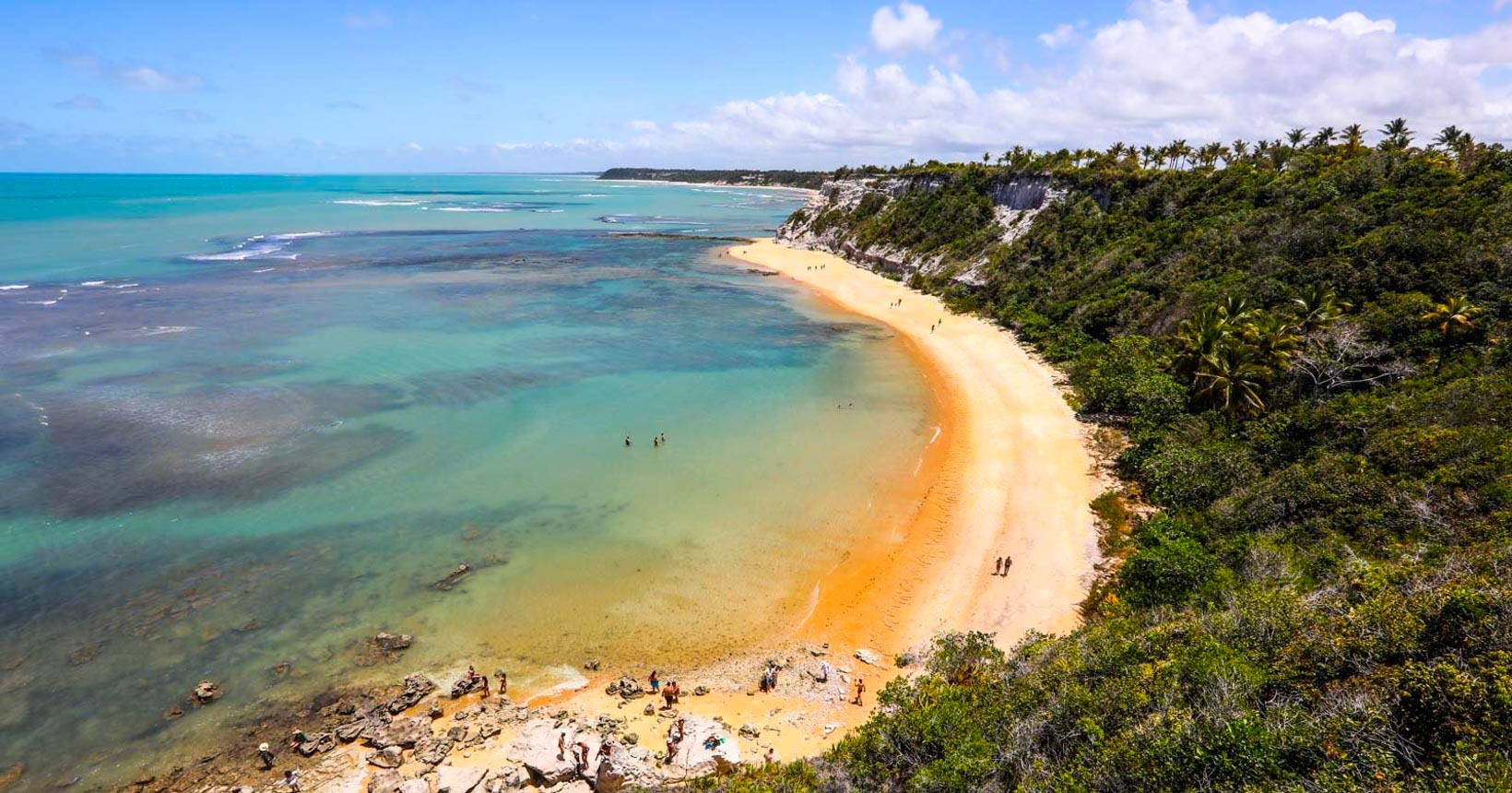
Cumuruxatiba — The Beach at the End of the Road
If Praia do Espelho is the jewel of south Bahia, Cumuruxatiba is the setting. This tiny fishing village at the end of a dirt road feels like it exists slightly outside of time. A few guesthouses, a handful of beach bars, and a wide empty beach where horses occasionally wander at low tide.
The surrounding waters are calm and shallow — ideal for swimming and snorkeling. Parque Nacional do Monte Pascoal, one of the first stretches of land seen by Portuguese explorer Pedro Álvares Cabral in 1500, sits just a short drive inland.
How to get there: From Porto Seguro, take a bus or shared van toward Itamaraju, then local transport to Cumuruxatiba. The final stretch is unpaved — a 4x4 is advisable during the rainy season.
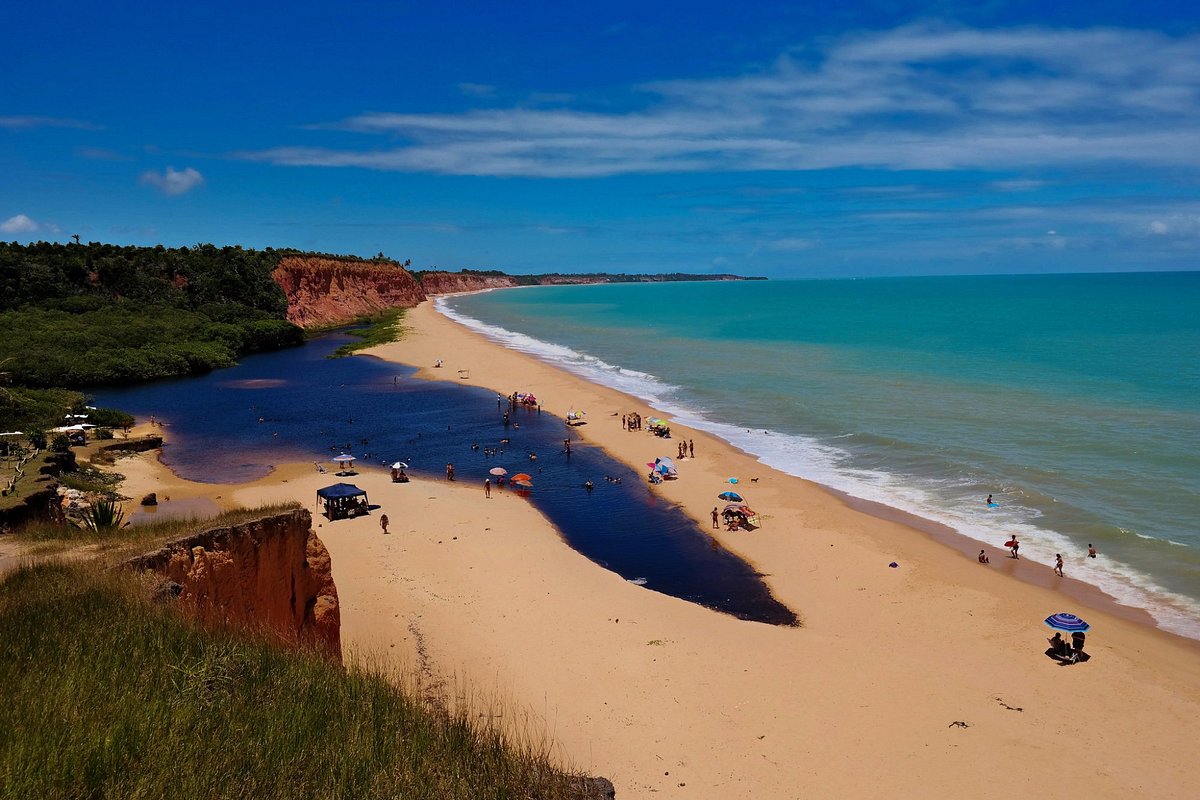
Praia de Trancoso — Sophisticated Seclusion
Technically accessible by road, Trancoso occupies a unique place in Brazilian travel culture. Once a hippie hideaway, it has evolved into one of the country's most quietly luxurious destinations without losing its village character. The Quadrado — a large grassy square surrounded by whitewashed chapels and colorful houses — is the social heart of the village.
Trancoso's best beaches, Praia do Rio Verde and Praia dos Nativos, require short walks through coastal scrub. They reward visitors with clear, calm water and minimal crowds even in high season.
How to get there: Fly to Porto Seguro (PSV), then a 30-minute transfer south. Trancoso is also reachable by boat from Arraial d'Ajuda.
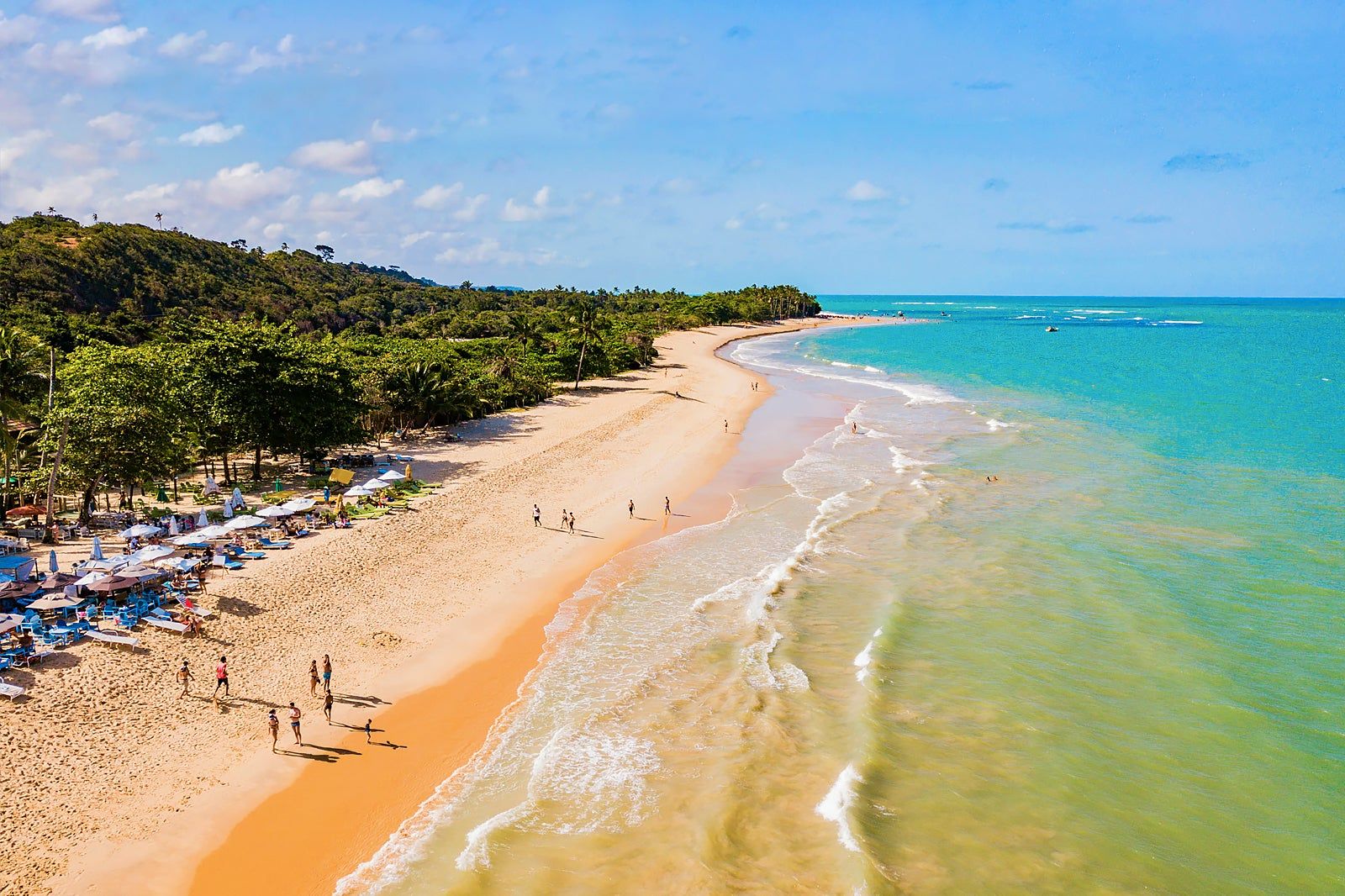
Hidden Beaches of Ceará
Ceará's coastline is one of the most dramatic in Brazil — a landscape of dunes, freshwater lagoons, and fishing villages stretching over 600 kilometers. The trade winds that blow constantly offshore make it a world-class destination for kitesurfing. Many of its most spectacular beaches remain far off the tourist trail.
Jericoacoara — The World's Most Beautiful Village
Jericoacoara (known simply as "Jeri") is not entirely unknown — it appears on multiple lists of the world's most beautiful beaches. But what most visitors do not realize is how difficult it is to reach, and how that difficulty filters the crowds.
There are no paved roads into Jeri. The final approach is by dune buggy or 4x4 across open sand. The village itself has no cars — transportation is by foot, bicycle, or horse. And yet the experience — watching the sunset from the top of a dune, swimming in freshwater lagoons, learning to windsurf — is extraordinary.
How to get there: Fly to Fortaleza (FOR). Take a transfer van to Jijoca de Jericoacoara (about 4 hours), then a 4x4 over the dunes (30 minutes). The journey is part of the experience.
Nearby accommodation: Pousadas and eco-lodges within the car-free village. Book well in advance for high season (July and December/January).
Best time to visit: June to August for the strongest winds (kitesurfers and windsurfers), or December to January for beach weather.

Morro Branco and Praia das Fontes — The Painted Cliffs
About 80 km east of Fortaleza, Morro Branco is famous for its extraordinary multi-colored sandstone cliffs — streaks of red, orange, yellow, and white layered through the rock face. Local artisans use the colored sand to create miniature landscape paintings inside sealed glass bottles, a craft unique to this stretch of coast.
Praia das Fontes, just south, takes its name from the natural freshwater springs that bubble up through the sand. The sweet, cool water is a striking contrast with the salty Atlantic crashing nearby.
How to get there: From Fortaleza, take a bus or tour van east along the coast road — about 90 minutes.
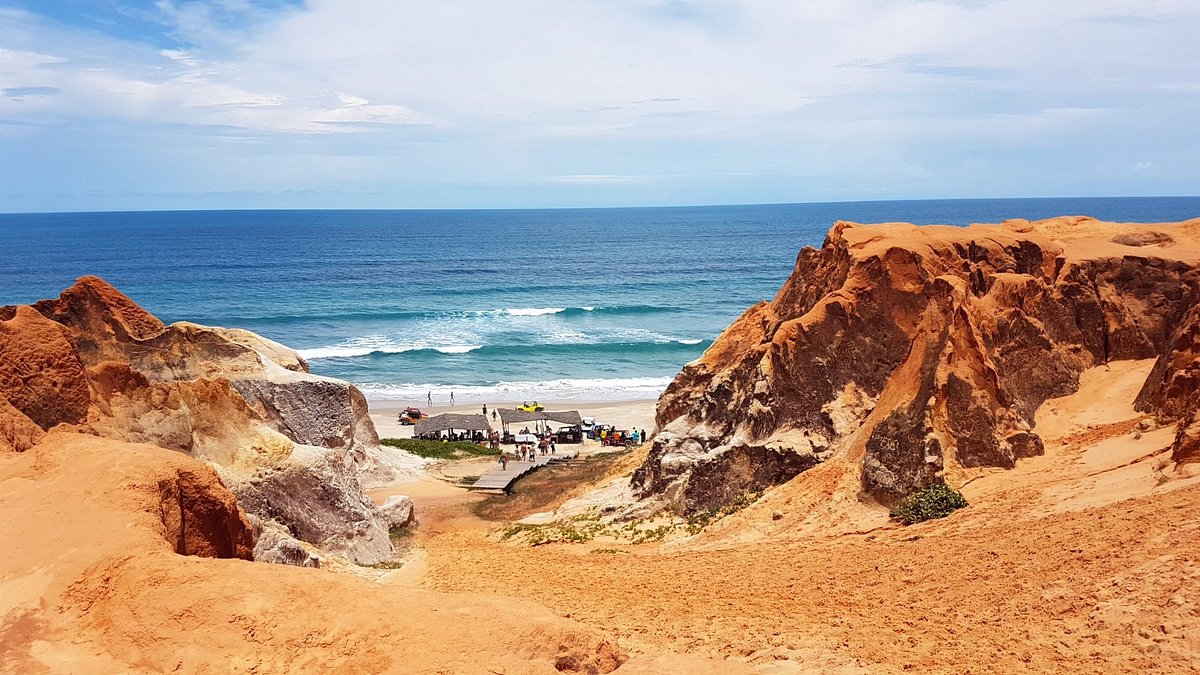
Praia de Taíba — The Kite Capital
Less than two hours from Fortaleza, Taíba is the kind of place that serious kitesurfers have known about for years while regular tourists have not caught up. Constant trade winds, a long shallow beach break, and a complete absence of resort infrastructure make it ideal for the sport — and for travelers who want to find Brazil's coast in its unpolished state.
A small village of fishermen's houses and pousadas sits behind the dunes. In the evenings, a handful of bars serve cold beer, fresh seafood, and live forró music on weekends.

Hidden Beaches of Santa Catarina
Santa Catarina's island capital, Florianópolis, has over 40 beaches within city limits — but visitors who arrive knowing only Jurerê or Praia Mole miss the island's most spectacular coastline, accessible only on foot.
Lagoinha do Leste — The Island's Best-Kept Secret
Reached by a 90-minute hike from the Pântano do Sul neighborhood — or by boat — Lagoinha do Leste is a beach inside a protected environmental park with no permanent infrastructure. No kiosks, no vendors, no lifeguards. Just a perfect crescent of wild sand, a freshwater lagoon behind the dunes, and the kind of raw natural beauty that makes you feel like you discovered something.
The trail winds through Atlantic Forest, past a waterfall, and emerges onto the beach with a view that makes the effort immediately worthwhile. Bring everything you need — water, food, sunscreen — because there is nothing to buy here.
How to get there: From central Florianópolis, take a bus to Pântano do Sul and follow the marked hiking trail south. Alternatively, hire a boat from Pântano do Sul harbor for a shorter approach.

Praia do Matadeiro — A 15-Minute Walk from the Crowds
Just south of the popular Armação beach but accessible only via a short coastal trail, Praia do Matadeiro rewards a modest 15-minute walk with a beach that feels entirely different from the busier options nearby. Rocky headlands on both sides create a natural enclosure. A freshwater stream meets the sea at the southern end. The surf is gentle enough for swimming.
How to get there: Take a bus to Armação beach, then follow the coastal path south (15 minutes on foot).

Praia da Solidão — The Beach of Solitude
The name says it all. Located on the southern coast of Florianópolis island, accessible by a short track and trail, Solidão is the kind of beach where you might spend a full afternoon without seeing another person. Open ocean, strong surf (not suitable for swimming), dramatic basalt rock formations, and an uninterrupted Atlantic horizon.
How to get there: Rent a car or take a taxi toward the southern end of the island near Pântano do Sul, then walk the short access trail.

Transportation Tips: Getting to Remote Beaches
Getting to hidden beaches in Brazil requires flexibility and advance planning. Here is what works:
- Rental car: The most flexible option for Bahia and Ceará. Many roads are unpaved — check rental terms for off-road use, and consider a 4x4 in rainy season.
- Shared vans (vans or kombis): Local shared vans connect most coastal towns and are far cheaper than private taxis. Ask at local bus stations for routes.
- Mototaxis: Common in smaller towns throughout Bahia and Ceará. Fast, cheap, and useful for the final kilometers to a beach.
- Boats and canoes: For beaches like Praia do Espelho and Lagoinha do Leste, water access is part of the journey. Arrange at the nearest village harbor.
- Hiking: Many beaches in Santa Catarina require a walk. Closed-toe shoes, water, and downloaded offline trail maps are essential.
Connectivity note: Navigating between remote areas is dramatically easier with mobile data. WhatsApp is how local drivers, boat operators, and pousadas communicate — you will need a working number with data to coordinate arrivals and last-minute changes. International roaming charges in Brazil can be steep, and local SIM cards require a CPF (Brazilian tax ID) that most foreigners do not have. A travel eSIM like FlyConnecta activates the moment you land, on the same networks locals use — no store, no paperwork.
Accommodation Near Hidden Beaches
Hidden beaches rarely have large hotels nearby — and that is part of the charm.
- Pousadas (guesthouses): The Brazilian B&B, usually family-run, with breakfast included. Book via WhatsApp for the best rates and direct communication.
- Eco-lodges: Common near protected areas. Solar-powered and often spectacular.
- Camping: Permitted in some coastal parks, including near Lagoinha do Leste in Florianópolis. Research current park regulations in advance.
- Airbnb: Works well in Trancoso, Jericoacoara, and the larger coastal towns with reliable infrastructure.
Safety Tips for Remote Beaches
The more secluded the beach, the more important basic safety awareness becomes.
- Tell someone your plans. Before hiking to a remote beach, inform your pousada or a trusted contact of your route and expected return time.
- Check ocean conditions. Beautiful beaches do not always mean safe swimming. Many remote beaches face the open Atlantic with strong currents and no lifeguards. Ask locals before entering the water.
- Bring enough water. On beaches without infrastructure, there are no vendors. Plan on at least 2 liters per person for a full day.
- Download offline maps. Cell signal disappears on trails and remote beaches. Download your route before losing signal. Google Maps and Maps.me both work offline.
- Secure your valuables. Bring only what you need. A waterproof phone pouch is a smart investment.
- Take sunburn seriously. Tropical sun at Brazilian latitudes is intense. Reef-safe sunscreen and a wide-brimmed hat are not optional.
Best Time to Visit by Region
| Region | Best Months | What to Avoid |
|---|---|---|
| Bahia (south coast) | September–March | April–June (rainy, muddy roads) |
| Ceará | June–August | January–March (rainy season) |
| Santa Catarina | December–February | June–August (cold, large surf) |
Frequently Asked Questions
Are hidden beaches in Brazil safe for solo travelers?
Most are very safe — the main risks are natural rather than criminal: strong currents, jellyfish, and intense sun. Remote areas of Bahia require some caution on access roads after dark. Travel with a companion when hiking long trails, stick to established routes, and you will generally have a trouble-free experience.
Do I need a guide to reach remote beaches?
For most beaches in this guide, no. Praia do Espelho, Lagoinha do Leste, and the Ceará beaches are well-documented and regularly visited by independent travelers. However, for the deepest south Bahia coast in low season, a local guide adds both safety and local knowledge.
Can I camp on hidden beaches in Brazil?
In designated areas, yes. Camping is permitted near Lagoinha do Leste and in the Cumuruxatiba region with proper authorization. Research current national park regulations before assuming camping is allowed.
How do I handle cash in remote beach areas?
Withdraw sufficient cash before heading to remote areas. ATMs exist in larger towns but are unreliable in very small villages. Many small pousadas and beach bars accept PIX (Brazil's instant payment system), but not international cards.
Is Portuguese necessary for remote beach travel?
More so than in Rio or São Paulo, yes. English is rarely spoken in fishing villages and small towns throughout Bahia and Ceará. Download a translation app for offline use and save key phrases. Mobile data makes real-time translation far more practical.
What is the single most beautiful hidden beach in Brazil?
It depends on what you seek. For visual drama, Praia do Espelho in Bahia is hard to beat. For dune landscapes and wind sports, Jericoacoara in Ceará is extraordinary. For accessible wilderness within a city, Lagoinha do Leste in Florianópolis is remarkable. Each region offers something distinct.
How do I find boat transfers to beaches accessible only by water?
At the harbor of the nearest town, ask local fishermen about fretamentos (private boat charters). Prices are negotiable and best arranged in person. Local operators communicate via WhatsApp — having mobile data from the moment you arrive in Brazil is genuinely useful for this.
Can I visit multiple regions in one trip?
Absolutely. A strong route: fly into Fortaleza, explore Ceará's coast for a week, then fly south to Porto Seguro for Bahia's hidden beaches. Alternatively, base yourself in Florianópolis and use it as a hub for Santa Catarina. Two to three weeks allows you to do any of these combinations properly.
Discover Brazil's Best-Kept Secrets — Stay Connected While You Do
The beaches in this guide are not hard to find. But they are not easy to reach without preparation. Knowing your route, having offline maps loaded, and being able to communicate with local pousadas and boat operators on the ground can make the difference between a smooth adventure and a frustrating one.
Before each beach excursion: download your offline maps, save the coordinates of your accommodation, and pre-load any trail information you need. Then enjoy your remote beach, knowing that a reliable connection is waiting for you when you return to signal range.
FlyConnecta provides Brazil travel eSIM plans for 7, 15, and 30 days — no CPF, no store visit, no paperwork. Install before your flight, activate when you land, and explore Brazil's hidden coastline with full confidence.
Get your Brazil eSIM and start planning your beach escape → FlyConnecta
Suggested internal links: