Choosing where to stay in Rio de Janeiro is one of the most important decisions of your trip. The city is large, diverse, and geographically complex — neighborhoods that look close on a map can be a 30-minute drive apart, and the character of each area is completely different.
The good news: Rio has the right neighborhood for every type of traveler. Whether you are a first-timer who wants to be steps from Copacabana beach, a traveler who prefers boutique charm in Santa Teresa, a family looking for safety and space in Barra da Tijuca, or a digital nomad building a life in Botafogo — this guide will help you find your base.
Understanding Rio's Geography
Rio de Janeiro is often described as one of the most beautiful cities in the world, and much of that beauty comes from its geography: the city wraps around bays, mountains, forests, and beaches in a way that creates dramatically different neighborhoods in close proximity.
The main tourist areas are concentrated in the Zona Sul (South Zone): Copacabana, Ipanema, Leblon, and Botafogo. This is where most hotels are located, where public transport is most developed, and where tourist infrastructure is most concentrated.
Centro (downtown) is Rio's historic heart — colonial buildings, museums, and commerce — but it empties out after business hours and is not recommended as a base for tourists.
Barra da Tijuca, further west along the coast, is a more modern, suburban neighborhood with large shopping malls, family-friendly beaches, and a quieter pace.
Santa Teresa, a hillside neighborhood above the city center, is bohemian, artistic, and unlike anything else in Rio.
Copacabana — The Classic Choice
Copacabana is the most famous neighborhood in Rio, and for good reason. The 4-kilometer stretch of beach backed by a promenade lined with hotels, restaurants, and kiosks is genuinely iconic — and surprisingly accessible for most budgets.
Who Should Stay in Copacabana
- First-time visitors who want the classic Rio experience
- Travelers who prioritize beach access — the beach is literally at your door
- Solo travelers and couples who want energy, movement, and plenty of options
What to Expect
- Hotels: Copacabana has the widest range of hotel options in Rio, from budget guesthouses to the legendary Copacabana Palace (one of South America's great hotels). Mid-range hotels with partial ocean views run $80–150/night; luxury properties start at $300+.
- Food: Restaurants and kiosks cover every price point. The famous per-kilo (pay-by-weight) restaurants offer excellent value for lunch.
- Nightlife: Copacabana has a busy nightlife scene, though parts of the beachfront after midnight can be rowdy. Choose your area within the neighborhood carefully.
- Transport: Excellent metro access via Cardeal Arcoverde and Siqueira Campos stations (Line 1). Easy Uber connections to the rest of the city.
Safety in Copacabana
The main beach promenade and the streets directly behind it are generally safe during the day and early evening. Be more cautious late at night, particularly on the beach itself after dark — it is not recommended to walk there alone after midnight. Keep your phone and valuables secured in busy areas, and use Uber for nighttime transport rather than walking long distances.

Ipanema — Upscale, Stylish, and the Best Beach in Rio
Just west of Copacabana, separated by a small lagoon inlet, Ipanema is the neighborhood Brazilians point to when they want to show Rio at its finest. The beach is slightly less crowded than Copacabana, the streets are more tree-lined, and the general atmosphere is calmer and more upscale.
Who Should Stay in Ipanema
- Couples looking for a romantic, refined base
- Food lovers — Ipanema and adjacent Leblon have some of Rio's best restaurants
- Travelers who want style and quality without the mass-tourism feel of Copacabana
- Those who want to be close to the action without being in the thick of it
What to Expect
- Hotels: More boutique in character than Copacabana's large tower hotels. Expect to pay slightly more. A solid mid-range hotel in Ipanema costs $120–200/night.
- Food: Excellent and diverse. The Saturday organic market on Praça General Osório is a neighborhood highlight. Juice bars, bakeries, and fine dining all coexist within walking distance.
- Shopping: Ipanema has Rio's best independent boutiques and design shops, particularly along Rua Garcia d'Avila and Rua Visconde de Pirajá.
- Beach: Divided into unofficial sections (postos) by lifeguard towers. Posto 9 (near Rua Vinícius de Moraes) is the famous youth and LGBTQ+-friendly section. Posto 10 is calmer and family-oriented.
Safety in Ipanema
Ipanema is generally safer than Copacabana. The side streets are pleasant to walk during the day and into the evening. The beach during the day is active and monitored by lifeguards. Use Uber for late-night transport.
Leblon — Rio's Quietest Luxury
Leblon is the neighborhood that serious Rio lovers tend to gravitate toward after their first visit. It sits at the western end of Ipanema beach — the two beaches are technically continuous — and it is the most residential and upscale area in the Zona Sul. Leblon has fewer hotels than Copacabana or Ipanema, but those that exist are excellent.
Who Should Stay in Leblon
- Repeat visitors who want to go beyond the typical tourist circuit
- Travelers prioritizing safety — Leblon consistently ranks as one of Rio's safest neighborhoods
- Those who prefer a quieter, more residential atmosphere with easy beach access
- Food lovers — Leblon has some of Rio's most acclaimed restaurants
What to Expect
- Hotels: Fewer options but high quality. Boutique properties and extended-stay apartments are more common than large hotel towers. Prices are generally higher than Ipanema.
- Restaurants: Outstanding. Leblon's dining scene is serious and wide-ranging, from excellent casual spots to sophisticated tasting menus.
- Convenience: Two shopping centers nearby (Shopping Leblon, BarraShopping). Good pharmacies and supermarkets. Metro access is more limited than in Ipanema — you will rely more on Uber for longer journeys.
Safety in Leblon
One of the safest neighborhoods in all of Rio de Janeiro. Residential streets are calm and well-lit. The beach area is quieter than Copacabana, with less crowding and less chaotic energy.
Santa Teresa — Rio's Bohemian Heart
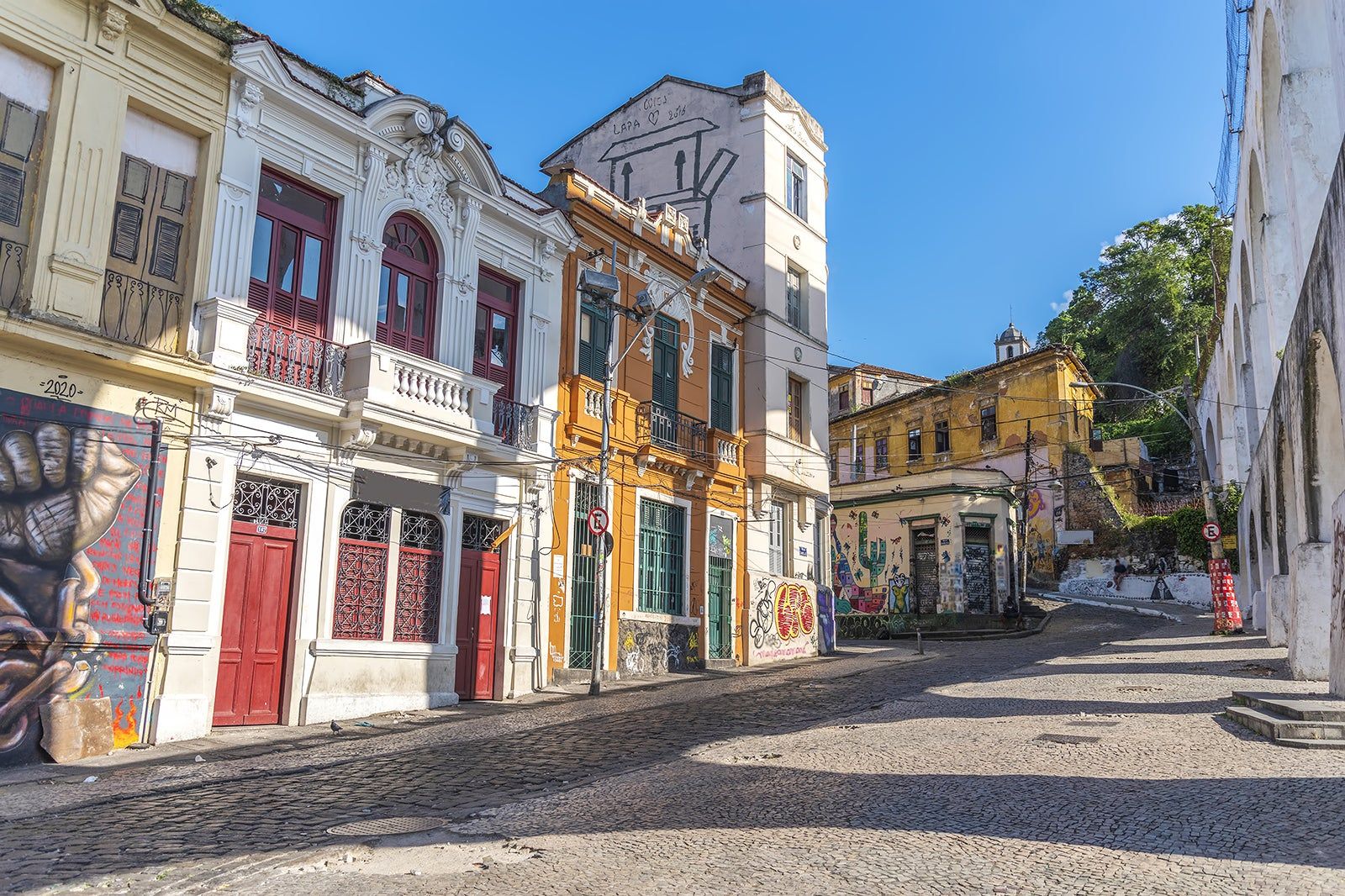
Perched on a hillside above the city center, Santa Teresa is unlike any other neighborhood in Rio. It has the feel of a village within a city — cobblestone streets, colonial mansions converted into boutique hotels and restaurants, street art around every corner, and a creative community that has been drawn here for decades.
Who Should Stay in Santa Teresa
- Artists, creatives, and design-conscious travelers
- Those who want a local, non-touristy experience
- Solo travelers who enjoy exploring on foot without a strict beach agenda
- Travelers with a mid-to-upper budget — Santa Teresa is not a budget destination
What to Expect
- Hotels: A mix of boutique pousadas and converted mansion hotels. The Santa Teresa Hotel (Relais & Châteaux) is one of the most beautiful properties in the city. Well-positioned options range from $150–300/night.
- Restaurants: Creative, artisanal, and distinctive. Bar do Mineiro (traditional Brazilian food) is a neighborhood institution. Aprazível offers one of Rio's most romantic outdoor dining experiences.
- Transportation: No direct metro access. You rely on Uber, the historic yellow trams (bondes), or taxis. Getting in and out at night requires planning — always use Uber rather than walking unfamiliar routes.
Safety in Santa Teresa
Santa Teresa has a nuanced safety profile. The main streets and tourist areas are generally fine for daytime and early evening exploration. However, the neighborhood borders favelas on several sides, so orientation matters. Stick to main streets, use Uber at night without exception, and avoid wandering into unfamiliar alleys after dark.
Barra da Tijuca — The Suburban Alternative
Barra da Tijuca is a world apart from the Zona Sul. Located 30–40 minutes west of Copacabana, it is Rio's planned "new city" — wide boulevards, large shopping malls, high-rise condominiums, and a 14-kilometer beach that is far less crowded than Copacabana or Ipanema.
Who Should Stay in Barra da Tijuca
- Families with children who want space, safety, and calmer beaches
- Business travelers (Barra has a significant corporate business district)
- Travelers attending large events — Rock in Rio, international conferences, and major sporting events often take place in Barra
- Budget-conscious travelers — comparable quality accommodation costs 20–30% less than in the Zona Sul
What to Expect
- Hotels: A wide mix of business hotels, resort properties, and residential apartment hotels. Prices are consistently lower than Copacabana and Ipanema for comparable standards.
- Transport: Barra's main limitation is connectivity to the rest of Rio. Metro access is limited. You depend heavily on Uber for getting around and reaching the Zona Sul — budget extra time and cost for transport.
- Lifestyle: Spacious, car-dependent, suburban. Great if you want space and quiet. Less suited if you want the immersive, walkable energy of central Rio.
Safety in Barra da Tijuca
Generally very safe for tourists. The main residential and commercial areas are well-patrolled. The beach is calm and uncrowded. The car-dependent design means fewer street safety concerns than denser neighborhoods.
Safety Considerations Across Neighborhoods
No matter where you stay in Rio, some universal rules apply:
- Use Uber or 99 instead of street taxis, especially at night. Both apps track your driver, route, and vehicle — a meaningful safety advantage. Both require mobile data to function, so having a working connection at all times matters.
- Do not display expensive items on the street. Phones, cameras, and jewelry should be kept discreet and secure.
- Plan your routes in advance using Google Maps. Knowing where you are going avoids the "lost tourist" vulnerability. Download Rio's offline map before arriving.
- Stick to busy, well-lit streets after dark. Every neighborhood listed in this guide is safe in its main areas, but all Rio neighborhoods have their limits.
- Stay connected at all times. Mobile data allows you to call Uber instantly, use Google Maps, and contact your accommodation via WhatsApp — all of which directly support your safety.
Budget vs. Luxury Stays in Rio
Budget Options ($20–60/night)
- Hostels: Rio has an excellent hostel scene, particularly in Copacabana and Santa Teresa. Options like El Misti (Copacabana) and Maze Inn (Santa Teresa) are well-regarded.
- Budget guesthouses: Smaller family-run operations in residential streets, often including breakfast.
- Airbnb: Private rooms in shared apartments start around $20–30/night. Excellent value for budget travelers with access to local kitchens and neighborhoods.
Mid-Range Options ($60–150/night)
- The majority of solid hotels in Copacabana and Ipanema fall into this range.
- Airbnb entire apartments offer excellent value, particularly for stays of a week or more — weekly and monthly discounts from hosts (15–25%) are common and worth asking about.
Luxury Options ($200–500+/night)
- Copacabana Palace (Copacabana) — Rio's most iconic hotel, a true South American classic with legendary service and beachfront position.
- Fasano Rio (Ipanema) — design-forward beachfront luxury with one of Rio's best rooftop pools.
- Santa Teresa Hotel (Santa Teresa) — converted colonial mansion with panoramic city views, part of the Relais & Châteaux collection.
- Grand Hyatt Rio de Janeiro (Barra da Tijuca) — modern business and leisure luxury with extensive amenities.
Airbnb vs. Hotels in Rio
Both options work well in Rio, but they suit different traveler types:
Hotels are better when:
- You value consistency, 24/7 reception, and concierge services
- You are arriving late or at an unusual hour and need guaranteed check-in
- You are staying for a short trip of fewer than 5 days
- You want daily housekeeping and full on-site amenities
Airbnb is better when:
- You are staying for a week or more — host discounts make monthly and weekly rates significantly better value
- You want to live in a residential neighborhood and cook some of your own meals
- You are traveling in a group and need more space than a hotel room provides
- You want to save on accommodation and invest that money in experiences
Practical tip: When booking Airbnbs in Rio, prioritize hosts with 100+ reviews, look for Superhost status, and communicate via WhatsApp before booking to confirm the exact address and check-in procedure. Having mobile data from the moment you land makes coordinating with hosts frictionless and immediate.
Transport Tips for Getting Around Rio
Uber and 99
These are your most important mobility tools, especially at night. Both apps are widely used across Rio, prices are reasonable, and the GPS-tracked routes add a meaningful safety element over unregistered street taxis. Both apps require a working mobile data connection to function. Without data, you cannot call a ride.
Metro
Rio's metro (Metrô Rio) is reliable, affordable, and covers the most important tourist areas. Line 1 connects Copacabana, Ipanema, Botafogo, and the city center. Line 4 links Ipanema to Barra da Tijuca, though service is more limited. The metro is safe and efficient during daytime hours and in the early evening.
Walking
The Zona Sul is pleasant to walk during daylight hours. The beachfront promenade connecting Copacabana, Ipanema, and Leblon is ideal for walking and cycling. Do not walk to unfamiliar areas at night — use Uber instead.
Google Maps and Offline Navigation
Download Rio de Janeiro on Google Maps as an offline map before you arrive. Having offline maps means you can navigate without consuming data and can plan routes even with intermittent signal. Combine offline navigation with a working mobile data connection from your eSIM for the most reliable results.
Staying Connected in Rio de Janeiro
Having reliable mobile data in Rio is not optional — it is a practical necessity. Ordering an Uber, navigating with Google Maps, messaging your host on WhatsApp, checking your accommodation address, booking a restaurant — almost every practical element of daily life in Rio depends on connectivity.
The challenge with staying connected in Brazil:
- International roaming costs $10–15 per day with most carriers — expensive for multi-day or multi-week trips
- Airport WiFi is inconsistent and often requires a Brazilian phone number to activate
- Public WiFi at hotels and cafes is convenient but not secure for banking, work, or sensitive use
- Buying a local SIM card in Brazil requires a CPF (Brazilian tax ID) — which most foreign tourists do not have
The cleanest solution: a travel eSIM like FlyConnecta. You install and activate it on your phone before your flight. You land in Rio with a working data connection on Brazilian networks (Vivo, Claro, TIM). No CPF, no store visit, no fumbling at the airport. Just open the Uber app, call your ride, and start your trip.
Choose a 7, 15, or 30-day plan depending on the length of your stay. Use it for everything: Uber, Google Maps, WhatsApp, Instagram, work calls. One less thing to figure out when you have a whole city to explore.
Frequently Asked Questions
Is Copacabana or Ipanema better for first-time visitors?
Both are excellent choices. Copacabana has more hotel options at a wider range of price points. Ipanema has a calmer, more upscale atmosphere and is considered by many Brazilians to have the better beach. For first-timers who want the iconic Rio experience, Copacabana is hard to beat. For those who prefer a quieter, more refined base, Ipanema is the better fit.
Is Rio de Janeiro safe for tourists in 2026?
Rio is safe for tourists who take sensible precautions: stay in well-known neighborhoods, use Uber at night, keep your phone discreet, and avoid isolated streets after dark. The neighborhoods covered in this guide — Copacabana, Ipanema, Leblon, Santa Teresa, and Barra — are the city's most tourist-friendly areas.
How far is Barra da Tijuca from Ipanema?
About 30–40 minutes by Uber depending on traffic, or 45–60 minutes by public transport. The distance is manageable but Barra is not walkable to the Zona Sul — factor in extra time and transport cost if you stay there.
What is the best neighborhood for solo travelers?
Copacabana and Botafogo are the best options for solo travelers. Both have high densities of hostels, cafes, coworking spaces, and walkable things to do. Santa Teresa is also excellent for independent-minded solo travelers who want a more creative and local atmosphere.
Is Airbnb reliable in Rio de Janeiro?
Yes — Rio has a large, well-established Airbnb market. Look for hosts with strong review scores (4.8+ stars, 50+ reviews) and verify the neighborhood location carefully on Google Maps before booking. WhatsApp communication with hosts is standard in Rio, which requires a working mobile data connection.
How do I get from the airport to my hotel in Rio?
GIG (Galeão, Tom Jobim International Airport) is in the north of the city, about 45–60 minutes from Copacabana by Uber. SDU (Santos Dumont Airport) is centrally located and about 25–35 minutes from Copacabana. For both airports, use Uber or a registered airport taxi. Avoid unlicensed drivers — have your Uber app ready with mobile data active before you exit arrivals.
Do I need to speak Portuguese to stay in Rio?
In tourist-facing hotels and larger restaurants, English is generally spoken. In smaller guesthouses, local eateries, and most everyday situations, Portuguese is the primary language. Having Google Translate accessible on your phone is extremely helpful. A few basic Portuguese phrases go a long way in creating goodwill with locals.
What is the best area for nightlife in Rio?
Lapa (just below Santa Teresa) is Rio's most famous nightlife district — samba clubs, forró bars, and live music venues operate every night of the week. Ipanema and Leblon have a more upscale bar and restaurant nightlife scene. Barra da Tijuca has clubs popular with Rio's younger crowd.
Find Your Neighborhood, Then Arrive Connected
Rio de Janeiro rewards travelers who prepare. Choosing the right neighborhood for your style and budget is step one. Arriving with a reliable data connection is step two — because without it, calling an Uber from the airport, messaging your host, or navigating your first morning in the city becomes unnecessarily complicated.
With FlyConnecta, you activate a Brazil eSIM before your flight — instant connectivity on arrival, coverage on Vivo, Claro, and TIM networks, no CPF required, no store visit needed. Plans start at 7 days, with 15 and 30-day options available.
Land in Rio. Open your phone. Start exploring.